
What Reagents Are Used in a Hematology Analyzer
author: Antonmed
2026-09-22
Hematology analyzer uses a combination of reagents to dilute blood samples, lyse red blood cells, differentiate white blood cells, and measure parameters such as hemoglobin and blood cell counts. The exact reagent set depends on the analyzer's design, testing method, and whether it is a 3-part or 5-part hematology analyzer.
For laboratories, choosing the right reagent is not simply a matter of finding a compatible liquid. Reagent formulation, analyzer compatibility, storage conditions, consumption, and supply stability can all affect routine testing.
This guide explains the main types of hematology analyzer reagents, what each one does, and what laboratories and distributors should consider when sourcing them.
For laboratories, choosing the right reagent is not simply a matter of finding a compatible liquid. Reagent formulation, analyzer compatibility, storage conditions, consumption, and supply stability can all affect routine testing.
This guide explains the main types of hematology analyzer reagents, what each one does, and what laboratories and distributors should consider when sourcing them.
What Reagents Are Commonly Used in a Hematology Analyzer?
Most automated hematology analyzers use several types of reagents rather than a single reagent. The names and formulations vary between manufacturers, but the main categories include diluent, lyse reagent, hemoglobin reagent, cleaner, and other system-specific reagents.
1. Diluent
Diluent is one of the most commonly used reagents in a hematology analyzer.
Whole blood contains a high concentration of cells, so it cannot always be measured directly in its original state. The diluent mixes with the blood sample at a controlled ratio, allowing the analyzer to measure blood cells within a suitable concentration range.
Depending on the analyzer, the diluent may be involved in:
- Red blood cell and platelet counting
- White blood cell counting
- Sample dilution
- Maintaining appropriate conductivity and osmotic conditions
- Supporting stable cell measurement
- White blood cell counting
- Sample dilution
- Maintaining appropriate conductivity and osmotic conditions
- Supporting stable cell measurement
Because the diluent comes into direct contact with the sample and the analyzer's fluidic system, its formulation needs to match the analyzer's testing method.
2. Lyse Reagent
A lyse reagent is primarily used to break down red blood cells when the analyzer needs to measure or differentiate white blood cells.
Red blood cells are much more numerous than white blood cells. In certain measurement procedures, they need to be removed or altered so that the analyzer can detect the target cell populations more effectively.
The lyse reagent can therefore play an important role in:
- WBC counting
- WBC differentiation
- Hemoglobin measurement
- Creating conditions for specific analytical methods
- WBC differentiation
- Hemoglobin measurement
- Creating conditions for specific analytical methods
The exact composition and volume of lyse reagent depend heavily on the analyzer design. This is one reason why laboratories should not assume that a lyse reagent designed for one hematology analyzer will automatically work correctly with another.
3. Hemoglobin Reagent
Some hematology analyzers use a dedicated hemoglobin reagent, while other systems use a lysing reagent or an integrated reagent system for hemoglobin measurement.
After red blood cells are lysed, the analyzer measures the resulting solution using its specific optical or chemical measurement method.
The reagent system needs to provide consistent measurement conditions because hemoglobin is one of the routine parameters reported in a complete blood count (CBC).
For procurement teams, it is therefore useful to check the analyzer manufacturer's reagent requirements rather than selecting a hemoglobin reagent based only on its name.
Some hematology analyzers use a dedicated hemoglobin reagent, while other systems use a lysing reagent or an integrated reagent system for hemoglobin measurement.
After red blood cells are lysed, the analyzer measures the resulting solution using its specific optical or chemical measurement method.
The reagent system needs to provide consistent measurement conditions because hemoglobin is one of the routine parameters reported in a complete blood count (CBC).
For procurement teams, it is therefore useful to check the analyzer manufacturer's reagent requirements rather than selecting a hemoglobin reagent based only on its name.
4. Cleaner
A cleaner reagent is used to help maintain the analyzer's fluidic and measurement pathways.
During routine testing, blood components can remain inside tubing, chambers, apertures, or other parts of the fluid system. If residues accumulate, they may interfere with subsequent measurements or contribute to maintenance problems.
Depending on the analyzer, cleaning reagents may be used:
- Between samples
- During automated cleaning cycles
- During daily maintenance
- During periodic maintenance procedures
- During automated cleaning cycles
- During daily maintenance
- During periodic maintenance procedures
Cleaner consumption is an important practical consideration for high-volume laboratories because reagent usage is connected to both operating cost and maintenance routines.
5. Other System-Specific Reagents
Some hematology analyzers require additional reagents for particular measurement methods or operating procedures.
These may include specialized reagents used for:
- White blood cell differentiation
- Specific cell measurements
- Automated cleaning
- Background measurement
- Maintenance procedures
- Specific cell measurements
- Automated cleaning
- Background measurement
- Maintenance procedures
The exact reagent configuration is manufacturer- and analyzer-specific. For this reason, a reagent list should always be checked against the analyzer's technical documentation.
Do 3-Part and 5-Part Hematology Analyzers Use the Same Reagents?
Not necessarily. Both systems generally require basic reagents such as a diluent, while their reagent requirements can differ because their analytical methods and white blood cell differentiation processes are different.
A 3-part hematology analyzer typically differentiates white blood cells into three major groups based on the system's measurement principle. A 5-part hematology analyzer provides more detailed differentiation of white blood cell populations.
As a result, a 5-part system may require a more complex reagent configuration.
However, there is no universal reagent formula for all 3-part or all 5-part analyzers. Two analyzers in the same category may still use different reagents.
This is why analyzer compatibility is more important than simply matching the reagent category.
If you are already comparing 3-part and 5-part systems, the reagent cost and consumption should be considered alongside purchase price, testing volume, maintenance requirements, and the laboratory's testing needs.
Why Is Reagent Compatibility Important?
Reagent compatibility directly affects how consistently a hematology analyzer performs. A reagent is not simply a consumable that can be replaced based on its general purpose. Its formulation, concentration, sample-to-reagent ratio, and interaction with the analyzer's fluidic and measurement systems all need to work within the conditions for which the analyzer was designed.
This is particularly important when laboratories consider switching from the original reagent to an alternative supplier. Two products may both be labeled as a diluent or lyse reagent, but similar names do not necessarily mean identical formulations or performance. Differences in reagent characteristics can affect cell measurement, background levels, calibration, and overall test consistency.
For this reason, buyers should check compatibility at the specific analyzer-model level, rather than relying only on a supplier's general claim that a reagent is suitable for hematology analyzers. The reagent requirements, testing method, operating conditions, and recommended consumption should all be confirmed before introducing an alternative product into routine testing.
How Much Hematology Reagent Does an Analyzer Use?
There is no standard reagent consumption rate for all hematology analyzers. The amount used depends on the analyzer model, testing method, sample volume, and how often cleaning and maintenance cycles are performed. A small laboratory running a few dozen CBC tests a day will naturally have different reagent needs from a high-throughput laboratory processing hundreds of samples.
For buyers, the more useful figure is often reagent consumption per test rather than the amount of reagent in a single container. An analyzer may require different volumes of diluent, lyse reagent, or cleaner during testing and routine maintenance, so these numbers should be considered together when estimating monthly operating costs.
This is also why comparing hematology reagents by container price alone can be misleading. A lower-priced reagent is not necessarily more economical if the analyzer consumes more of it per test. When evaluating suppliers, it is better to look at the expected number of tests per reagent pack, actual consumption, and the supplier's ability to maintain a consistent supply.
How Should Hematology Analyzer Reagents Be Stored?
Hematology analyzer reagents should be stored according to the conditions specified by the manufacturer, as storage requirements can vary between formulations. Temperature is usually the first factor to check. Excessive heat, freezing, or repeated temperature changes may affect reagent stability and should be avoided.
Reagents should also be kept in their original, properly sealed containers and protected from direct sunlight and contamination. Before use, laboratories should check the expiration date and, where applicable, the stability period after opening. This is particularly important for labs with lower testing volumes, where a reagent may remain open for a longer period.
There is no single storage condition that applies to every hematology reagent. Following the product documentation is the safest way to maintain reagent quality and avoid unnecessary changes in analyzer performance during routine testing.
What Should Buyers Consider When Purchasing Hematology Analyzer Reagents?
For laboratories and distributors, reagent procurement should involve more than checking the unit price.
Step One, verify compatibility. Confirm the analyzer manufacturer, model, reagent type, and required testing method.
Step Two, check consumption. Compare expected reagent usage with your laboratory's daily or monthly sample volume.
Step Three, review stability and storage requirements. This is particularly relevant for distributors that need to manage inventory across different markets.
Step Four, consider supply continuity. A laboratory may depend on the same reagent every day, so consistent availability can be as important as the initial purchase price.
Step Five, evaluate supplier support. Clear product documentation, communication, after-sales support, and reliable delivery can reduce problems during routine operation.
For an IVD supplier such as Antonmed, experience with diagnostic reagent supply also means understanding the practical concerns behind B2B procurement—not only the product itself, but also batch consistency, delivery schedules, and after-sales communication. Antonmed has more than 13 years of IVD experience and has supported customers with diagnostic reagent supply, including drug-test reagents. These experiences are relevant when evaluating supplier reliability, although the specific compatibility of any hematology reagent should always be confirmed against the target analyzer.
3-Part vs. 5-Part Hematology Analyzer: What Is the Difference?
What is EtG Urine Alcohol Test
Related Article

Learn the differences between 3-part and 5-part hematology analyzers, including WBC differential, applications, workload, cost, maintenance, and purchasing considerations.
3-Part vs. 5-Part Hematology Analyzer: What Is the Difference?
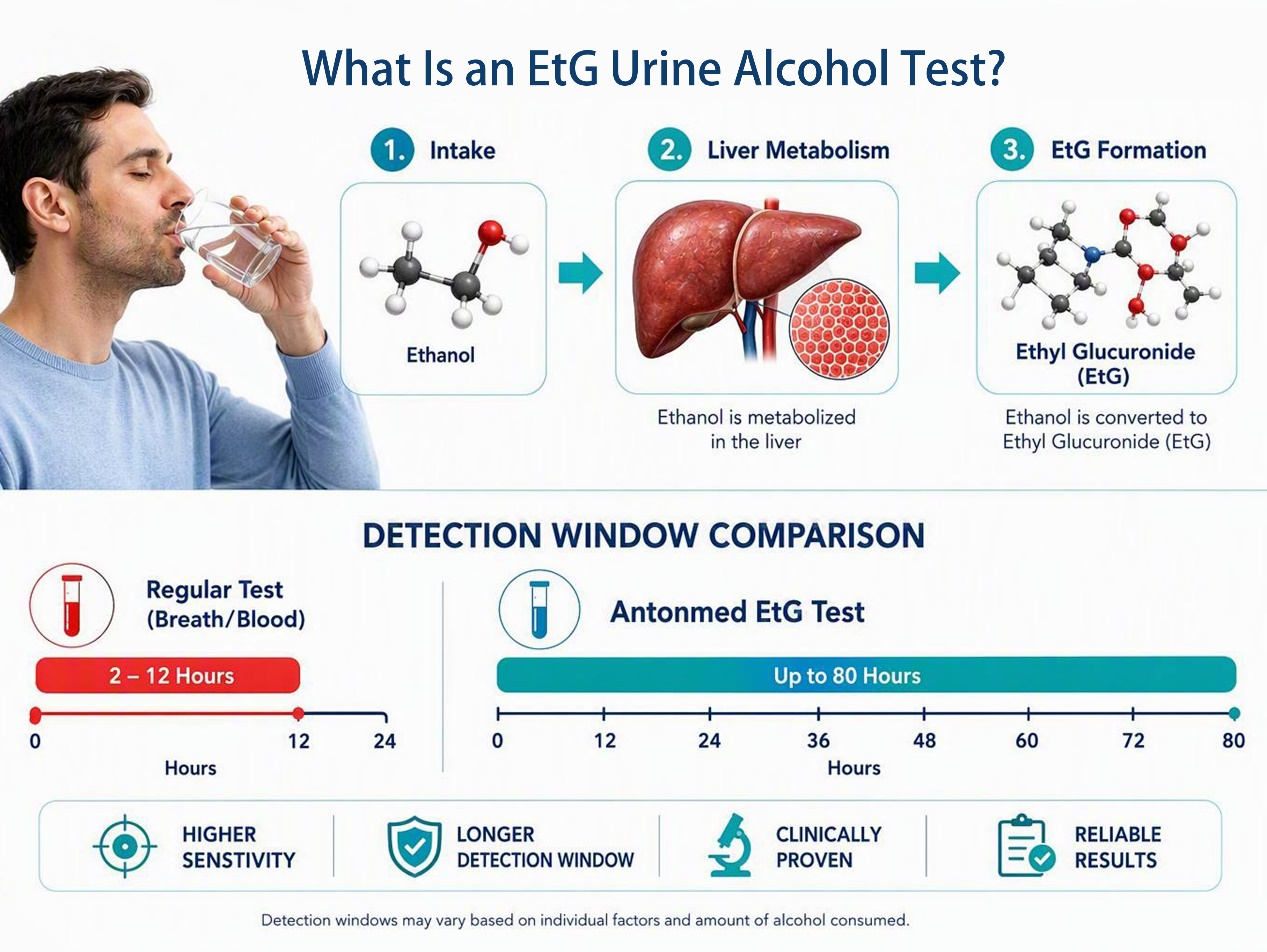
Learn what an EtG urine alcohol test is, how it detects recent alcohol exposure, and what affects its detection window, with EtG testing insights from Antonmed.
What is EtG Urine Alcohol Test
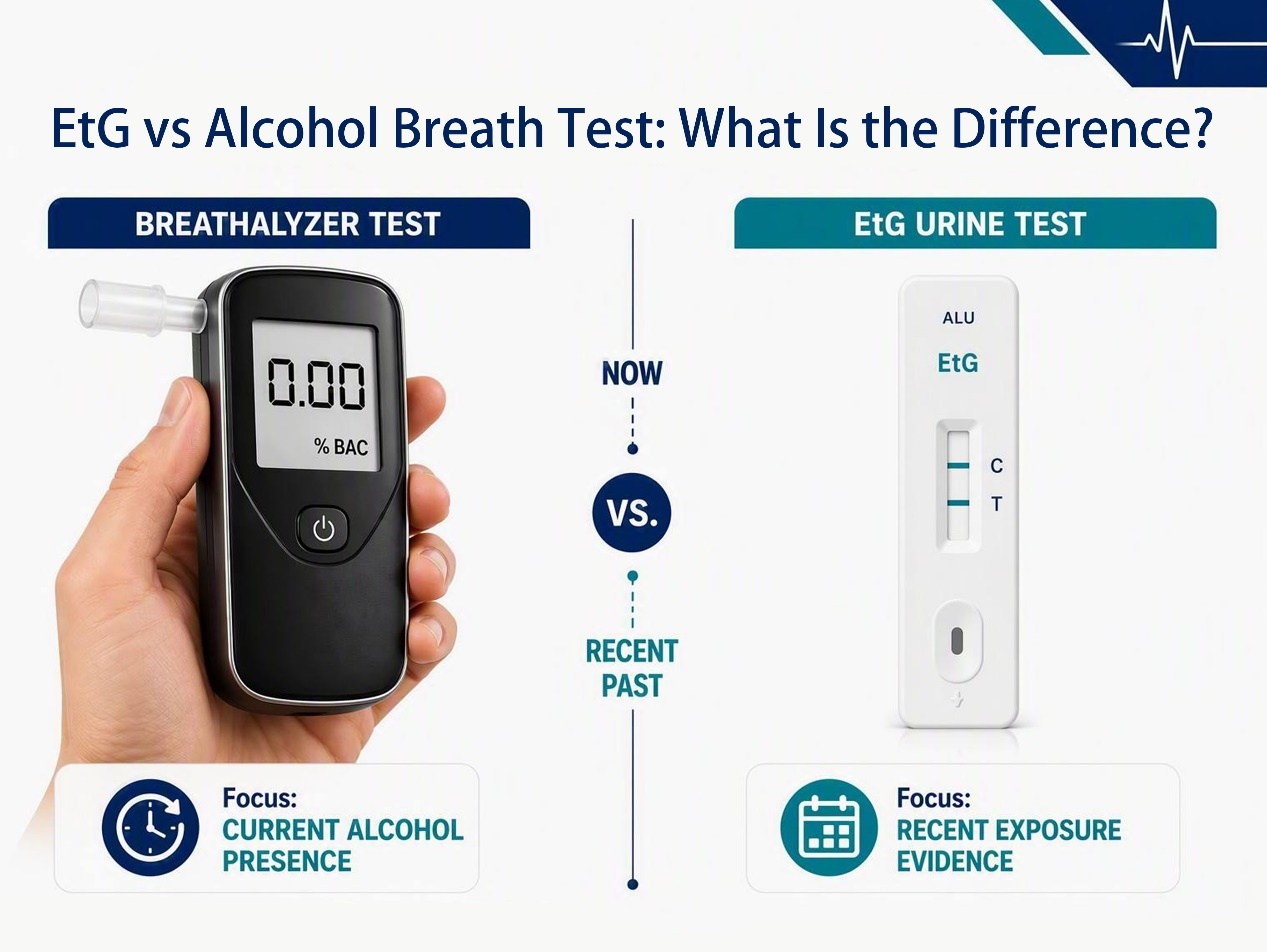
EtG vs alcohol breath tests measure alcohol exposure in different ways. This guide explains the key differences, detection windows, and testing applications, with insights from Antonmed as a professional diagnostic testing supplier.
EtG vs Alcohol Breath Test: What Is the Difference
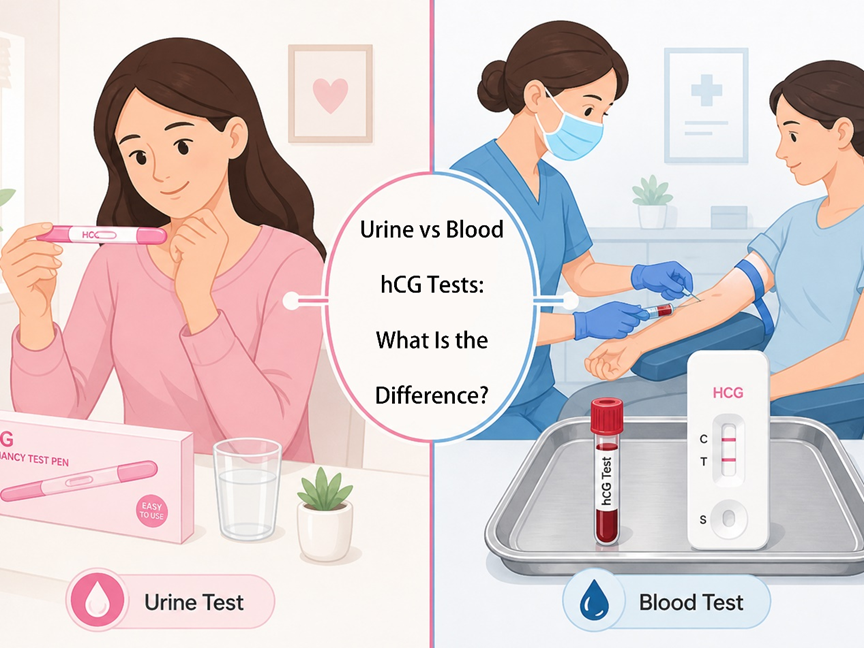
Urine and blood hCG tests both detect human chorionic gonadotropin (hCG), a hormone produced during pregnancy, but they differ in sensitivity, testing methods, timing, and practical use. This article explains the key differences between urine and blood hCG tests and helps readers understand when each testing method may be more appropriate.
Urine vs. Blood hCG Tests: What Is the Difference