
Home /Resources /Product Knowledge /3-Part vs. 5-Part Hematology Analyzer: What Is the Difference? /
3-Part vs. 5-Part Hematology Analyzer: What Is the Difference?
author: Antonmed
2026-09-22
When purchasing a hematology analyzer, one of the first decisions many laboratories face is whether to choose a 3-part or 5-part system. The difference may sound simple, but it can affect the type of blood cell information available, daily workflow, operating costs, and the suitability of the analyzer for different clinical settings.
A 3-part hematology analyzer is designed to provide a basic white blood cell differential, while a 5-part hematology analyzer provides a more detailed classification of white blood cells. However, this does not mean that a 5-part analyzer is automatically the better choice. The right system depends on what the laboratory needs to test, how many samples it handles, and how much differential information is required.
For laboratories comparing a 3-part vs. 5-part hematology analyzer, understanding this difference before purchasing can help avoid paying for capabilities that are not necessary—or selecting a system that cannot support the laboratory's routine workload.
A 3-part hematology analyzer is designed to provide a basic white blood cell differential, while a 5-part hematology analyzer provides a more detailed classification of white blood cells. However, this does not mean that a 5-part analyzer is automatically the better choice. The right system depends on what the laboratory needs to test, how many samples it handles, and how much differential information is required.
For laboratories comparing a 3-part vs. 5-part hematology analyzer, understanding this difference before purchasing can help avoid paying for capabilities that are not necessary—or selecting a system that cannot support the laboratory's routine workload.
What is a 3-Part Hematology Analyzer?
3-part hematology analyzer separates white blood cells into three main groups: lymphocytes, mid-sized cells, and granulocytes.
The MID category generally represents a combined group of cells that may include monocytes, eosinophils, and basophils. Because these cell types are not reported separately in a typical 3-part differential, the system provides a simpler view of the WBC distribution.
In addition to WBC and its differential, a 3-part hematology analyzer can provide routine complete blood count (CBC) parameters such as red blood cell and platelet measurements, hemoglobin, hematocrit, and related indices. The exact parameters depend on the analyzer model.
This simpler configuration can be practical when the main requirement is routine CBC testing rather than detailed leukocyte classification.
For example, a small clinic may process a relatively limited number of blood samples each day. If most tests are routine CBC examinations and there is no regular requirement for detailed WBC differentiation, a 3-part CBC analyzer may provide the information needed without adding unnecessary complexity to the workflow.
What is a 5-Part Hematology Analyzer?
5-part hematology analyzer provides a more detailed WBC differential. Instead of combining several cell types into a MID group, it typically reports neutrophils, lymphocytes, monocytes, eosinophils, and basophils separately.
This additional information can be useful when laboratories need a closer look at changes in different white blood cell populations. It is particularly relevant in clinical environments where the WBC differential forms an important part of routine laboratory interpretation.
Many 5-part hematology analyzers use additional optical, fluorescence, or other cell-classification technologies alongside cell counting methods. The exact measurement principle varies between manufacturers and instrument designs.
The important point for a buyer is not simply that a 5-part analyzer uses more advanced technology. The practical question is whether the additional differential information is useful for the laboratory's actual testing workload.
A hospital laboratory, for instance, may handle a much wider range of patient samples and require more detailed WBC information as part of its routine workflow. In that environment, the additional differentiation provided by a 5-part hematology analyzer may be relevant to daily laboratory operations.
3-Part vs. 5-Part Hematology Analyzer: What Is the Main Difference?
The main difference between a 3-part and 5-part hematology analyzer is the level of WBC differentiation.
With a 3-part system, WBCs are generally divided into lymphocytes, MID cells, and granulocytes. With a 5-part system, neutrophils, lymphocytes, monocytes, eosinophils, and basophils are typically reported as separate populations.
This difference affects how much information the laboratory receives from a CBC test.
A 3-part analyzer is therefore often associated with routine and basic laboratory testing, where a general WBC differential is sufficient. A 5-part analyzer is more appropriate when the laboratory needs a more detailed WBC differential as part of its routine testing.
It is worth avoiding a common misunderstanding here: 3-part does not mean low quality, and 5-part does not automatically mean better. They are designed around different levels of testing requirements.
A useful way to approach the 3 part vs 5 part hematology analyzer decision is to ask what information the laboratory actually needs rather than starting with the question of which system is more advanced.
Choosing Based on Laboratory Workload
Sample volume is another practical consideration.
A small outpatient clinic or primary laboratory may have a relatively stable and moderate CBC workload. In such a setting, a straightforward 3-part hematology analyzer can be easier to integrate into routine operations, particularly when the laboratory mainly performs basic CBC testing.
The purchasing decision may be different for a laboratory processing hundreds of samples daily. Higher testing volumes can make throughput, automation, workflow efficiency, reagent management, maintenance, and service support more important factors. If detailed WBC differentiation is also routinely required, a 5-part hematology analyzer may better match that workflow.
However, sample volume alone should not determine the choice. Two laboratories with similar workloads may have completely different clinical requirements.
The better purchasing approach is to consider sample volume together with test menu, clinical requirements, staffing, workflow, and expected future demand.
When Does a 3-Part Hematology Analyzer Make Sense?
A 3-part hematology analyzer can be a practical option for laboratories with straightforward CBC requirements.
Typical situations may include:
- Small clinics and outpatient facilities
- Primary healthcare laboratories
- Basic routine blood testing
- Laboratories with moderate sample volumes
Facilities where a detailed five-cell WBC differential is not routinely required. For these users, the advantages may extend beyond the initial purchase price. A simpler system can also mean a more straightforward operating process, easier staff training, and potentially simpler reagent and maintenance management, depending on the specific instrument.
For procurement teams, it is therefore useful to evaluate the total operating workflow rather than comparing purchase prices alone.
When Should a Laboratory Consider a 5-Part Analyzer?
A 5-part hematology analyzer becomes more relevant when the laboratory routinely needs detailed WBC differentiation.
This can be particularly important in hospitals, larger diagnostic laboratories, and facilities handling a broader range of clinical samples.
Separating neutrophils, lymphocytes, monocytes, eosinophils, and basophils provides more detailed information than a 3-part system. For laboratories where this information is regularly used in clinical interpretation or laboratory workflows, the additional capability may justify the higher level of system complexity and investment.
A buyer should also consider whether the laboratory expects its testing requirements to expand. Purchasing equipment only for today's workload can create limitations if the laboratory plans to add services, increase sample volume, or serve more demanding clinical applications later.
Cost, Maintenance, and Reagent Considerations
Cost is often one of the first factors considered in the 3-part vs. 5-part hematology analyzer decision, but it should not be viewed only as the purchase price.
A 3-part system will often have a lower initial investment and a relatively straightforward operating structure. A 5-part system generally involves more sophisticated WBC differentiation and may require a higher level of investment and technical support. Actual costs vary significantly between manufacturers and models.
Reagent consumption is another factor to evaluate. Buyers should compare reagent requirements, test capacity, shelf life, storage conditions, calibration requirements, and the availability of consumables in their market.
Maintenance should also be part of the purchasing discussion. An analyzer that meets the technical requirements but is difficult to maintain or lacks reliable local technical support can create problems after installation.
For international buyers, supplier support is particularly important. Before placing an order, it is worth confirming installation guidance, operator training, troubleshooting support, spare parts availability, warranty terms, and expected response times for technical issues.
These practical details can have a greater effect on the long-term ownership experience than a small difference in the initial equipment price.
What Should Buyers Compare Before Purchasing?
When comparing a 3-part or 5-part hematology analyzer, procurement teams should start with the laboratory's actual testing requirements.
The first question is whether the laboratory needs a three-group or five-cell WBC differential. Next, consider the expected daily sample volume and whether that volume is likely to increase.
The laboratory should then evaluate parameters and test menus, throughput, sample handling, reagent requirements, quality control procedures, maintenance workload, user training, and connectivity with existing laboratory systems.
Supplier capability is equally important. For an international laboratory, purchasing a hematology analyzer is not simply a transaction involving a piece of equipment. Long-term reagent supply, technical communication, after-sales support, and delivery reliability can directly affect laboratory continuity.
This is also where the experience of the manufacturer matters. As an IVD manufacturer and supplier with more than 13 years of industry experience, Antonmed works with overseas customers on product supply as well as technical and after-sales support. For buyers comparing suppliers, factors such as stable supply, communication, and support should be considered alongside the analyzer's technical specifications.
3-Part vs. 5-Part Hematology Analyzer: Which One Fits Your Laboratory?
There is no universal answer to the question of whether a 3-part or 5-part hematology analyzer should be purchased.
A 3-part hematology analyzer may be suitable when the laboratory focuses on routine CBC testing and does not require detailed WBC classification. A 5-part hematology analyzer may be considered when the laboratory needs separate reporting of neutrophils, lymphocytes, monocytes, eosinophils, and basophils as part of its routine workflow.
The decision should therefore begin with the laboratory's testing needs rather than the assumption that more differentiation is always necessary.
For procurement teams, a useful evaluation process is to define the required WBC differential, estimate current and future sample volume, review reagent and maintenance requirements, and assess the supplier's technical and after-sales support. This approach makes it easier to select a hematology analyzer that fits the laboratory's actual workflow and long-term operating requirements.
What Reagents Are Used in a Hematology Analyzer
Related Article

Learn what reagents are used in hematology analyzers, including diluent, lyse reagent, hemoglobin reagent, and cleaner, plus key compatibility and purchasing considerations.
What Reagents Are Used in a Hematology Analyzer
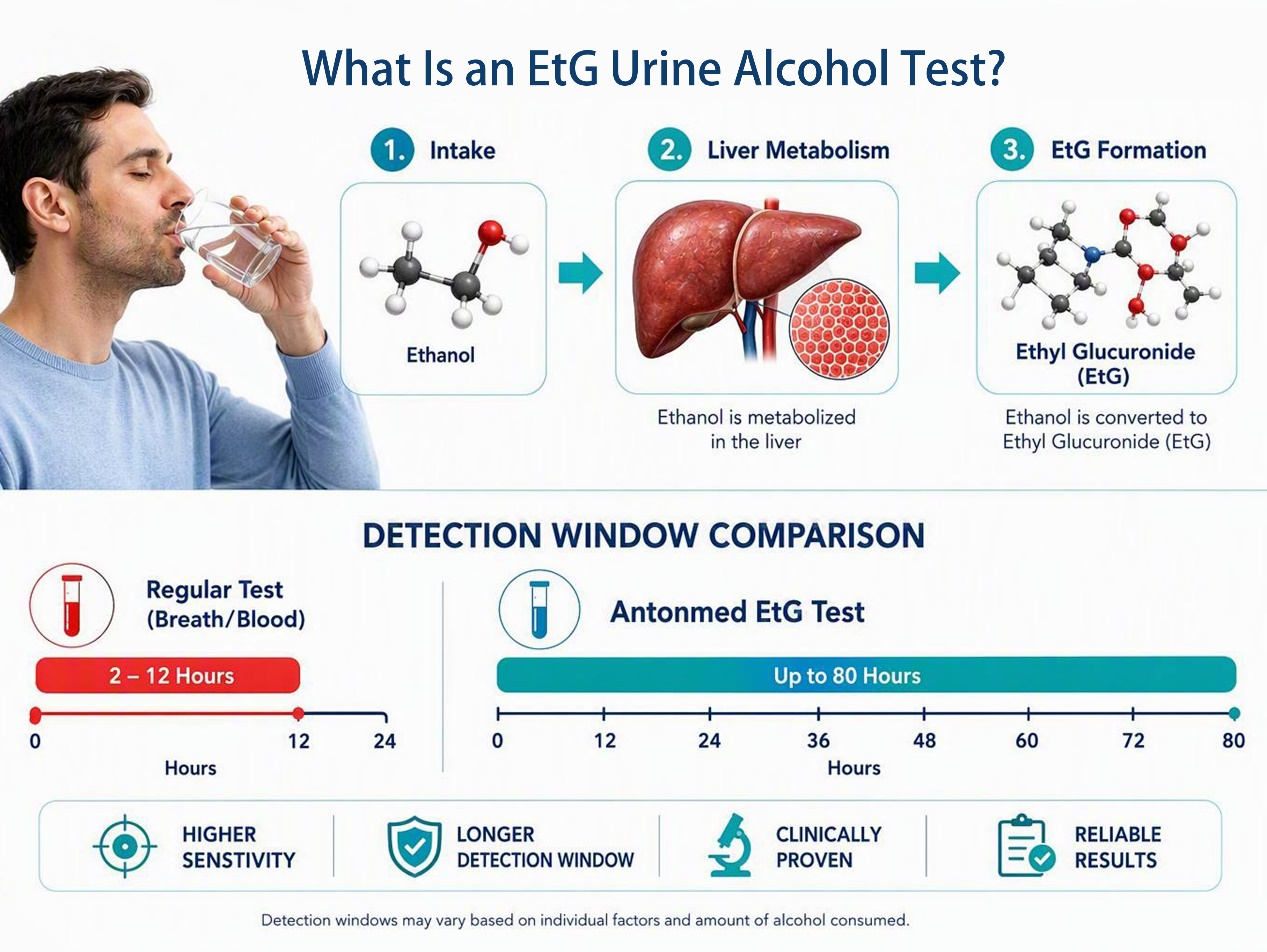
Learn what an EtG urine alcohol test is, how it detects recent alcohol exposure, and what affects its detection window, with EtG testing insights from Antonmed.
What is EtG Urine Alcohol Test
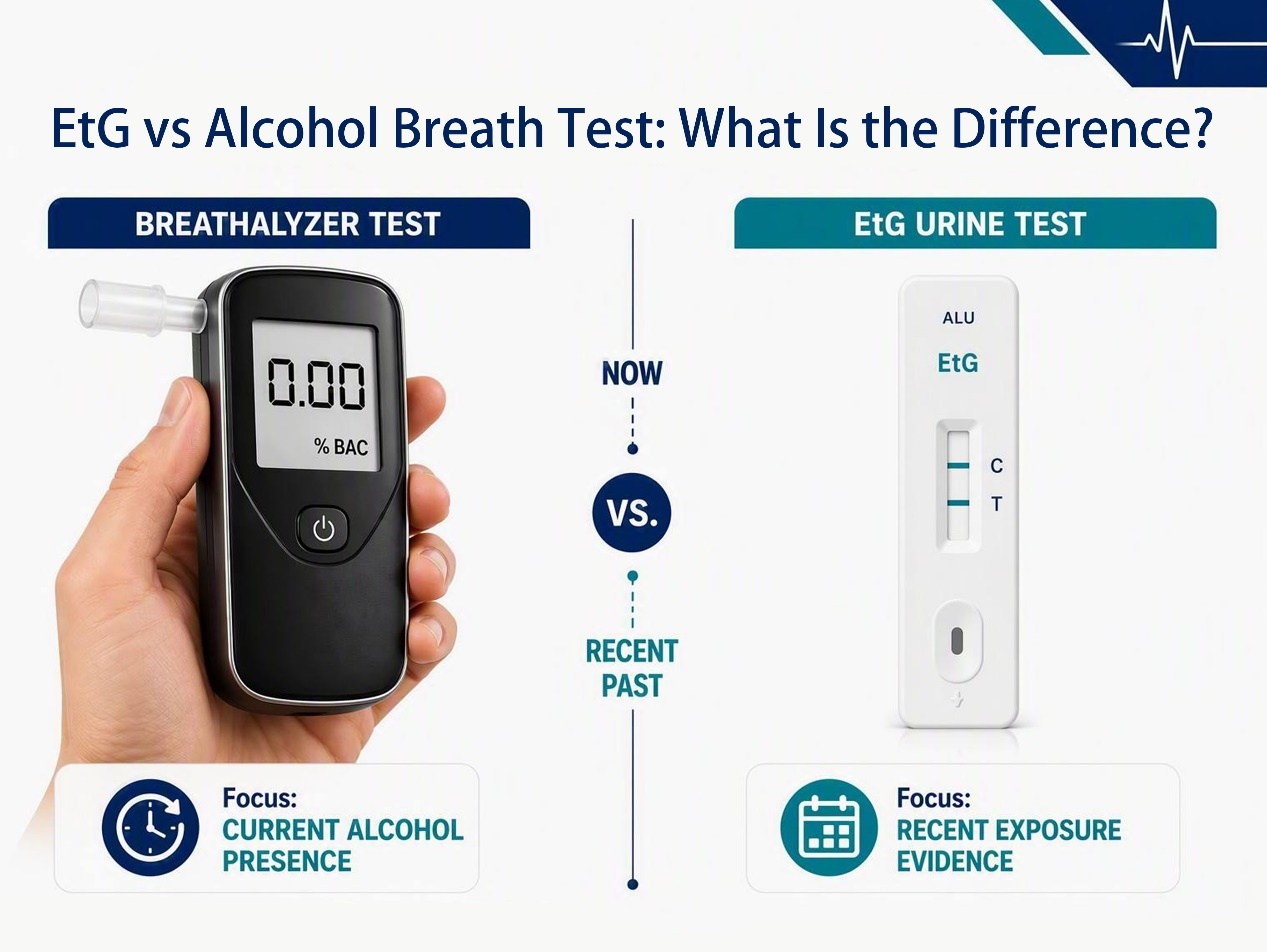
EtG vs alcohol breath tests measure alcohol exposure in different ways. This guide explains the key differences, detection windows, and testing applications, with insights from Antonmed as a professional diagnostic testing supplier.
EtG vs Alcohol Breath Test: What Is the Difference
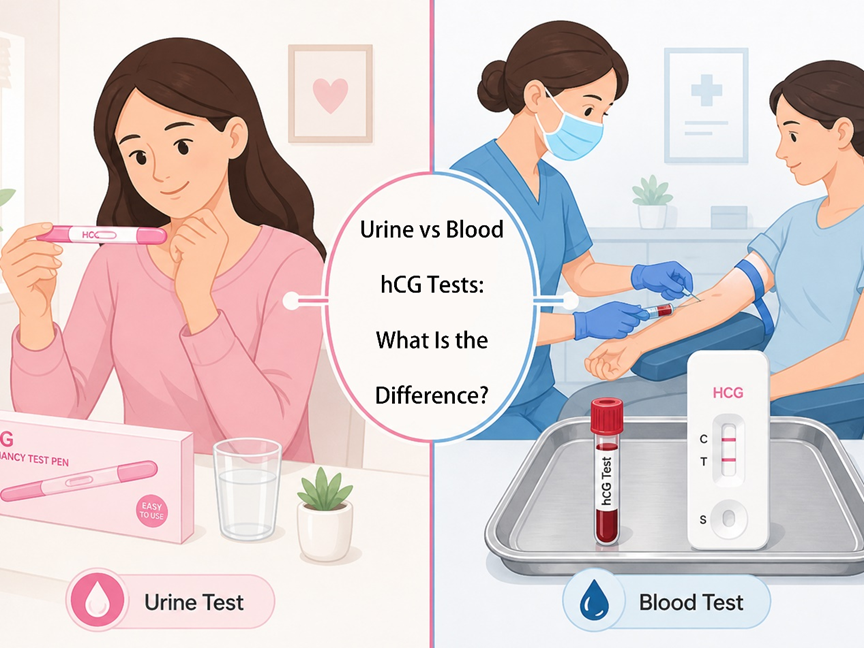
Urine and blood hCG tests both detect human chorionic gonadotropin (hCG), a hormone produced during pregnancy, but they differ in sensitivity, testing methods, timing, and practical use. This article explains the key differences between urine and blood hCG tests and helps readers understand when each testing method may be more appropriate.
Urine vs. Blood hCG Tests: What Is the Difference