
What is EtG Urine Alcohol Test
author: Antonmed
2026-09-20
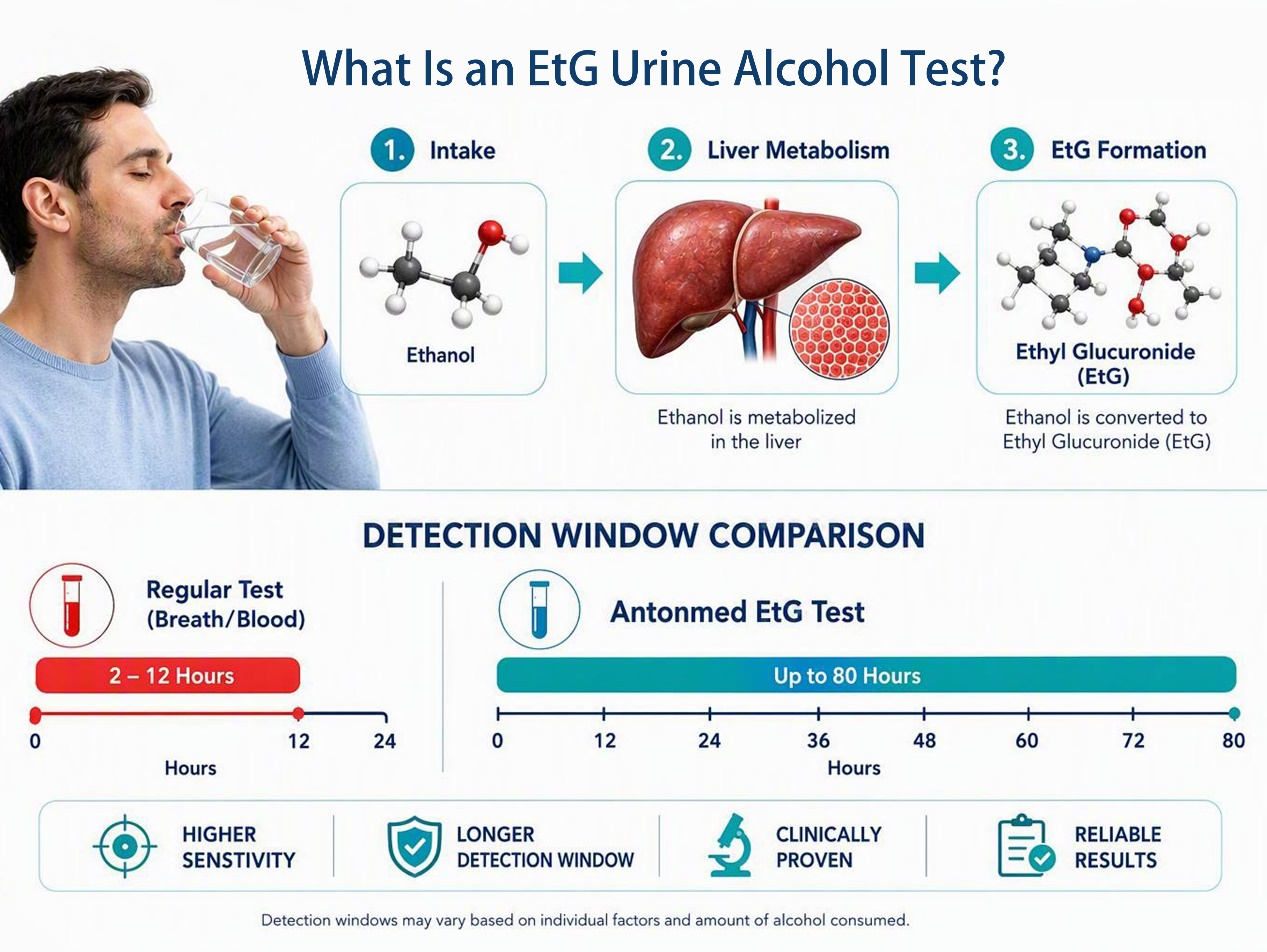
When people search for a urine alcohol test, they often come across the term EtG urine alcohol test. EtG stands for ethyl glucuronide, a metabolite produced when the body processes ethanol.
Unlike a test that looks directly for alcohol itself, an EtG urine test looks for this alcohol metabolite in urine. That difference is important because EtG can remain detectable after ethanol is no longer present in urine. As a result, EtG testing is commonly used when the purpose is to identify recent alcohol exposure over a longer detection window, rather than to determine whether someone is currently intoxicated.
Mayo Clinic Laboratories describes EtG as a direct metabolite of ethanol and notes that while alcohol itself may be detectable in urine for only a few hours, EtG can generally be detected for around one to three days in its screening context. The actual detection period can vary depending on the testing method, cutoff, amount and timing of alcohol exposure, and other factors.
Unlike a test that looks directly for alcohol itself, an EtG urine test looks for this alcohol metabolite in urine. That difference is important because EtG can remain detectable after ethanol is no longer present in urine. As a result, EtG testing is commonly used when the purpose is to identify recent alcohol exposure over a longer detection window, rather than to determine whether someone is currently intoxicated.
Mayo Clinic Laboratories describes EtG as a direct metabolite of ethanol and notes that while alcohol itself may be detectable in urine for only a few hours, EtG can generally be detected for around one to three days in its screening context. The actual detection period can vary depending on the testing method, cutoff, amount and timing of alcohol exposure, and other factors.
What Does an EtG Urine Alcohol Test Detect?
An EtG urine alcohol test detects ethyl glucuronide (EtG) in a urine sample.
After ethanol enters the body, most of it is metabolized through the body's normal pathways. A small portion is converted into metabolites such as ethyl glucuronide. Because EtG can remain in urine longer than ethanol itself, it can be used as a biomarker of recent alcohol exposure.
This is what makes an EtG test different from a standard urine alcohol test.
A test for ethanol is looking for alcohol itself. An EtG urine test is looking for evidence that the body has recently processed ethanol. The two tests therefore have different purposes and should not be treated as interchangeable.
For someone comparing alcohol testing methods, this distinction is often the first thing to understand: an EtG test is not designed to measure current blood alcohol concentration or determine a person's level of impairment. It is designed to identify EtG above the test's specified cutoff.
The process itself is relatively simple. A urine sample is collected, the test device is exposed to the sample according to the product instructions, and the result is read within the specified time.
For example, Antonmed's ETG Urine Alcohol Test Kit is designed for urine-based EtG screening. According to the product instructions, the test is immersed in a urine sample and the result is read at five minutes.
The simplicity of a rapid test is one of its practical advantages, particularly when a quick screening result is needed without sending every sample to a laboratory.
Laboratory EtG testing is a different process. When a more specific confirmation is required, laboratories may use LC-MS/MS (liquid chromatography-tandem mass spectrometry). Mayo Clinic Laboratories, for example, uses LC-MS/MS for its EtG confirmation testing.
This distinction is worth keeping in mind when comparing products. A rapid EtG test is generally intended for screening, while laboratory confirmation is used when a more specific analytical result is required.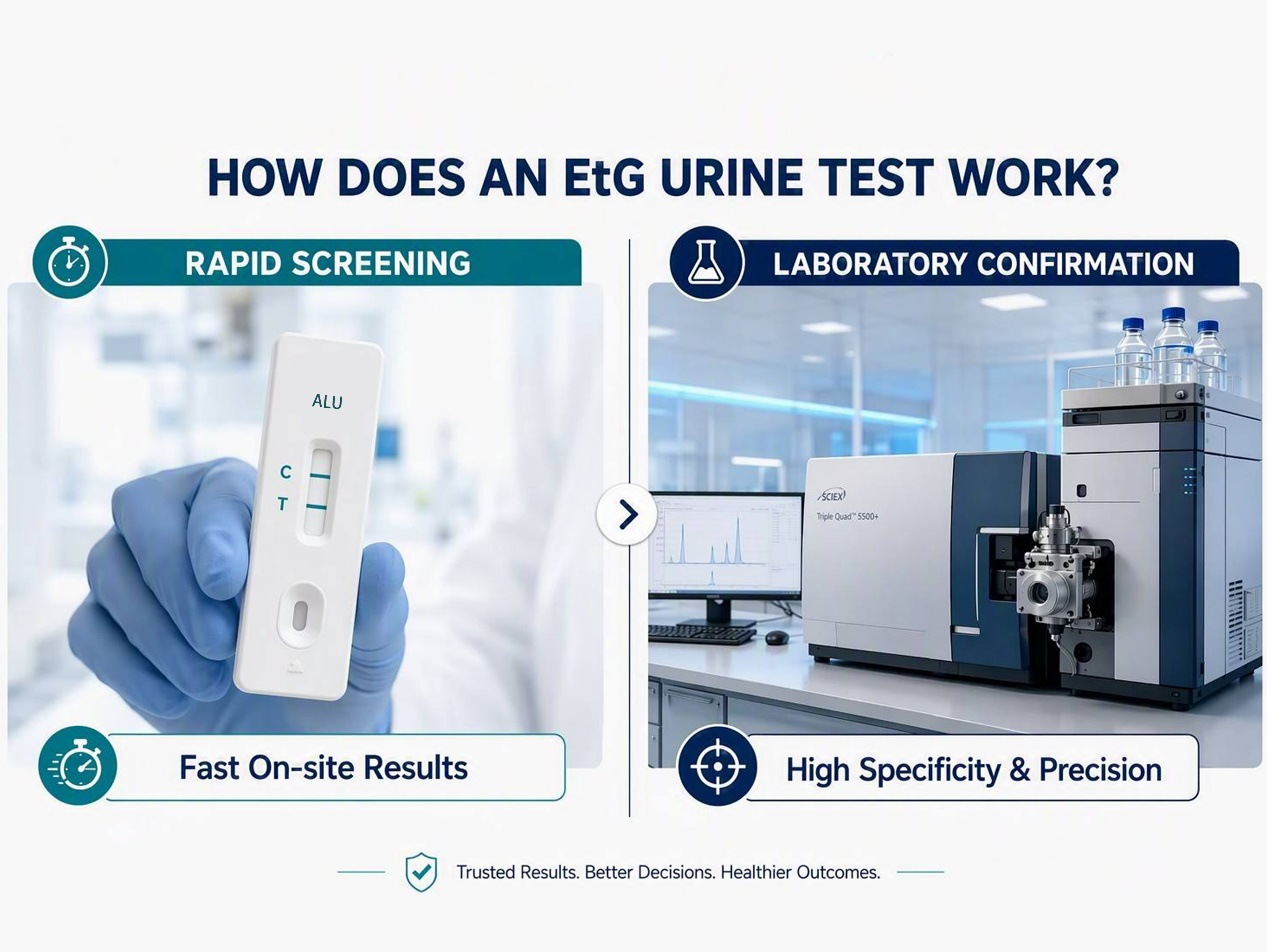
There is no single detection time that applies to every person or every EtG test.
The detection window depends on several variables, including the amount and timing of alcohol exposure, urine concentration, the analytical method, and the cutoff used by the test.
For one commonly used EtG immunoassay screening method, Mayo Clinic Laboratories gives a typical detection period of approximately one to three days.
However, laboratory confirmation methods can have different detection characteristics. Mayo's current confirmation information notes that EtG and EtS may be detected for up to five days in urine under a specific testing setup using a 500 ng/mL cutoff.
That is why it is better to avoid statements such as "EtG always lasts 72 hours."
A more accurate explanation is that EtG has a longer detection window than urine ethanol, but the actual window depends on the test and the circumstances of the sample.
This is particularly important when comparing different EtG urine test kits. Two products may both be described as EtG tests while using different cutoffs or analytical methods.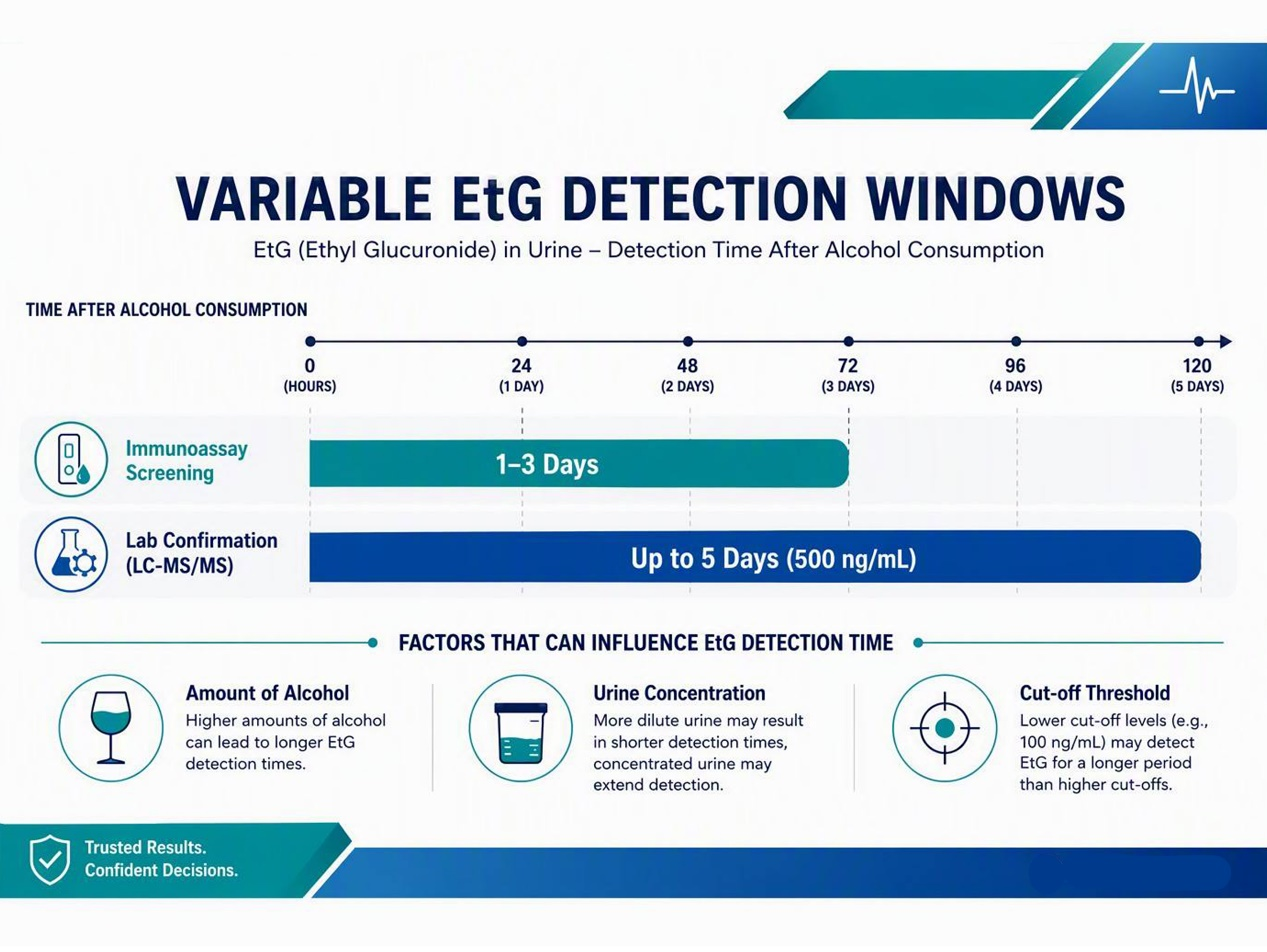
An EtG urine test may still detect recent alcohol exposure after 24, 48, or 72 hours, depending on the circumstances. The amount of alcohol consumed, the time since exposure, urine concentration and the test's cutoff can all affect whether EtG remains above the detection threshold.
This also explains why an EtG test should not be used as a precise "alcohol clock."
A positive result does not tell you exactly when alcohol was consumed or exactly how much was consumed. Mayo Clinic Laboratories notes that a positive EtG screening result indicates the potential presence of EtG and does not necessarily correspond to the degree of physiological or psychological effects.
For this reason, when someone asks, "Can an EtG test detect alcohol after 72 hours?", the most accurate answer is it can in some circumstances, but the result cannot be predicted from the 72-hour timeframe alone.
EtG Urine Test vs. Alcohol Test: What Is the Difference?
Although the terms are sometimes used interchangeably, an EtG urine test and a direct alcohol test are not measuring the same thing.
A breath alcohol test measures ethanol in exhaled breath and is generally used to assess current alcohol presence. A blood alcohol test measures ethanol in blood. A urine ethanol test looks for alcohol in urine, while an EtG urine test looks for the metabolite produced after ethanol is processed by the body.
The difference can be summarized simply:
Ethanol testing asks whether alcohol itself is present. EtG testing asks whether the alcohol metabolite EtG is present above the test's cutoff.
That makes EtG useful when recent alcohol exposure is the focus and a longer detection window is preferred over direct ethanol measurement.
For a rapid EtG test that uses a control line and test line, a negative result generally means the test line and control line are both visible, while a positive screening result may be indicated by the presence of the control line without the test line. An invalid result occurs when the control line does not appear.
For Antonmed's ETG Urine Alcohol Test Kit, the product instructions use this type of visual interpretation and specify a five-minute reading time.
It is important, however, not to confuse a rapid screening result with definitive laboratory confirmation.
Immunoassays can have analytical limitations, including the possibility of cross-reactivity. Mayo Clinic Laboratories therefore describes its EtG immunoassay screen as a preliminary analytical test and uses a more specific method such as LC-MS/MS when confirmation is required.
In other words, a rapid EtG urine test can be useful for screening, but the appropriate follow-up depends on why the test is being performed and how the result will be used.
EtG and related alcohol biomarkers can, in some circumstances, be associated with exposure to alcohol-containing products. SAMHSA has noted the need to consider possible exposure from products such as mouthwash and hand sanitizers when interpreting EtG results.
This does not mean that using a hand sanitizer or mouthwash will automatically produce a positive EtG test. The relevance of such exposure depends on the circumstances, the amount and timing of exposure, the test method and the cutoff.
For that reason, EtG results are best interpreted in context rather than treated as a standalone measurement of alcohol consumption.
After ethanol enters the body, most of it is metabolized through the body's normal pathways. A small portion is converted into metabolites such as ethyl glucuronide. Because EtG can remain in urine longer than ethanol itself, it can be used as a biomarker of recent alcohol exposure.
This is what makes an EtG test different from a standard urine alcohol test.
A test for ethanol is looking for alcohol itself. An EtG urine test is looking for evidence that the body has recently processed ethanol. The two tests therefore have different purposes and should not be treated as interchangeable.
For someone comparing alcohol testing methods, this distinction is often the first thing to understand: an EtG test is not designed to measure current blood alcohol concentration or determine a person's level of impairment. It is designed to identify EtG above the test's specified cutoff.
How Does an EtG Urine Test Work?
Rapid EtG urine tests commonly use an immunoassay to screen a urine sample for EtG. The test is designed to react when the concentration of EtG reaches or exceeds a predefined cutoff.The process itself is relatively simple. A urine sample is collected, the test device is exposed to the sample according to the product instructions, and the result is read within the specified time.
For example, Antonmed's ETG Urine Alcohol Test Kit is designed for urine-based EtG screening. According to the product instructions, the test is immersed in a urine sample and the result is read at five minutes.
The simplicity of a rapid test is one of its practical advantages, particularly when a quick screening result is needed without sending every sample to a laboratory.
Laboratory EtG testing is a different process. When a more specific confirmation is required, laboratories may use LC-MS/MS (liquid chromatography-tandem mass spectrometry). Mayo Clinic Laboratories, for example, uses LC-MS/MS for its EtG confirmation testing.
This distinction is worth keeping in mind when comparing products. A rapid EtG test is generally intended for screening, while laboratory confirmation is used when a more specific analytical result is required.
How Long Does EtG Stay in Urine?
How long EtG stays in urine is probably one of the most common questions surrounding EtG testing.There is no single detection time that applies to every person or every EtG test.
The detection window depends on several variables, including the amount and timing of alcohol exposure, urine concentration, the analytical method, and the cutoff used by the test.
For one commonly used EtG immunoassay screening method, Mayo Clinic Laboratories gives a typical detection period of approximately one to three days.
However, laboratory confirmation methods can have different detection characteristics. Mayo's current confirmation information notes that EtG and EtS may be detected for up to five days in urine under a specific testing setup using a 500 ng/mL cutoff.
That is why it is better to avoid statements such as "EtG always lasts 72 hours."
A more accurate explanation is that EtG has a longer detection window than urine ethanol, but the actual window depends on the test and the circumstances of the sample.
This is particularly important when comparing different EtG urine test kits. Two products may both be described as EtG tests while using different cutoffs or analytical methods.
Can an EtG Test Detect Alcohol After 24, 48, or 72 Hours?
It may, but there is no reliable way to determine the result from elapsed time alone.An EtG urine test may still detect recent alcohol exposure after 24, 48, or 72 hours, depending on the circumstances. The amount of alcohol consumed, the time since exposure, urine concentration and the test's cutoff can all affect whether EtG remains above the detection threshold.
This also explains why an EtG test should not be used as a precise "alcohol clock."
A positive result does not tell you exactly when alcohol was consumed or exactly how much was consumed. Mayo Clinic Laboratories notes that a positive EtG screening result indicates the potential presence of EtG and does not necessarily correspond to the degree of physiological or psychological effects.
For this reason, when someone asks, "Can an EtG test detect alcohol after 72 hours?", the most accurate answer is it can in some circumstances, but the result cannot be predicted from the 72-hour timeframe alone.
EtG Urine Test vs. Alcohol Test: What Is the Difference?
Although the terms are sometimes used interchangeably, an EtG urine test and a direct alcohol test are not measuring the same thing.
A breath alcohol test measures ethanol in exhaled breath and is generally used to assess current alcohol presence. A blood alcohol test measures ethanol in blood. A urine ethanol test looks for alcohol in urine, while an EtG urine test looks for the metabolite produced after ethanol is processed by the body.
The difference can be summarized simply:
Ethanol testing asks whether alcohol itself is present. EtG testing asks whether the alcohol metabolite EtG is present above the test's cutoff.
That makes EtG useful when recent alcohol exposure is the focus and a longer detection window is preferred over direct ethanol measurement.
What Does a Positive or Negative EtG Test Mean?
The exact interpretation depends on the test format and the manufacturer's instructions.For a rapid EtG test that uses a control line and test line, a negative result generally means the test line and control line are both visible, while a positive screening result may be indicated by the presence of the control line without the test line. An invalid result occurs when the control line does not appear.
For Antonmed's ETG Urine Alcohol Test Kit, the product instructions use this type of visual interpretation and specify a five-minute reading time.
It is important, however, not to confuse a rapid screening result with definitive laboratory confirmation.
Immunoassays can have analytical limitations, including the possibility of cross-reactivity. Mayo Clinic Laboratories therefore describes its EtG immunoassay screen as a preliminary analytical test and uses a more specific method such as LC-MS/MS when confirmation is required.
In other words, a rapid EtG urine test can be useful for screening, but the appropriate follow-up depends on why the test is being performed and how the result will be used.
Can Other Alcohol Exposure Affect an EtG Test?
Another question that often comes up is whether alcohol exposure can occur without drinking an alcoholic beverage.EtG and related alcohol biomarkers can, in some circumstances, be associated with exposure to alcohol-containing products. SAMHSA has noted the need to consider possible exposure from products such as mouthwash and hand sanitizers when interpreting EtG results.
This does not mean that using a hand sanitizer or mouthwash will automatically produce a positive EtG test. The relevance of such exposure depends on the circumstances, the amount and timing of exposure, the test method and the cutoff.
For that reason, EtG results are best interpreted in context rather than treated as a standalone measurement of alcohol consumption.
What Is the Cutoff for an EtG Test?
The EtG cutoff is the concentration used by a test to distinguish a screening result as positive or negative.
Cutoffs matter because they influence how a test performs around the lower end of the detection range. They also make it difficult to compare two EtG tests simply by looking at their product names.
For example, Mayo Clinic Laboratories lists a 500 ng/mL screening cutoff for one EtG immunoassay. Its confirmation method uses different analytical thresholds, including 250 ng/mL for EtG and 100 ng/mL for EtS.
The appropriate cutoff depends on the intended application and the validated performance of the specific test. Buyers should therefore look beyond phrases such as "high sensitivity" and review the actual product specifications.
For an EtG test kit, useful information includes the intended use, sample type, cutoff, test format, reading time, storage conditions and available quality or regulatory documentation.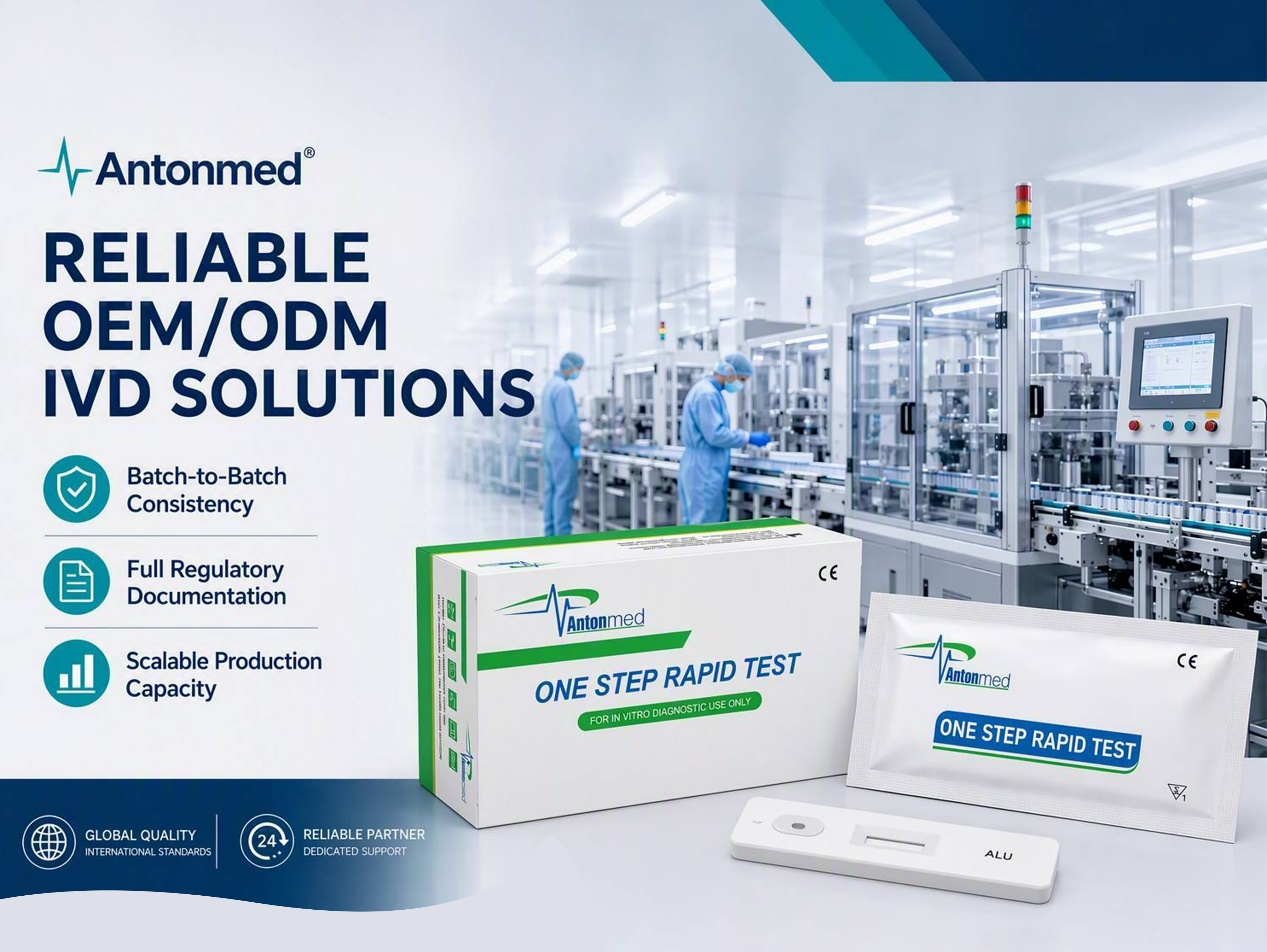

Cutoffs matter because they influence how a test performs around the lower end of the detection range. They also make it difficult to compare two EtG tests simply by looking at their product names.
For example, Mayo Clinic Laboratories lists a 500 ng/mL screening cutoff for one EtG immunoassay. Its confirmation method uses different analytical thresholds, including 250 ng/mL for EtG and 100 ng/mL for EtS.
The appropriate cutoff depends on the intended application and the validated performance of the specific test. Buyers should therefore look beyond phrases such as "high sensitivity" and review the actual product specifications.
For an EtG test kit, useful information includes the intended use, sample type, cutoff, test format, reading time, storage conditions and available quality or regulatory documentation.
What Should Buyers Look for in an EtG Test Kit?
For an individual user, a simple procedure and easy-to-read result may be the most important considerations.
For a distributor, importer, clinic or healthcare supplier, the decision is usually more involved.
The manufacturer needs to provide reliable information about the product's intended use and performance, while the buyer may also need to consider packaging, shelf life, production capacity and regulatory documentation for the target market.
For companies looking for an EtG test manufacturer or EtG urine test supplier, OEM and private-label capability can also be important. A distributor may need customized packaging, a specific test format or a stable supply arrangement rather than simply purchasing an off-the-shelf product.
That is where the difference between buying a test and establishing a long-term supply relationship becomes important.
For a distributor, importer, clinic or healthcare supplier, the decision is usually more involved.
The manufacturer needs to provide reliable information about the product's intended use and performance, while the buyer may also need to consider packaging, shelf life, production capacity and regulatory documentation for the target market.
For companies looking for an EtG test manufacturer or EtG urine test supplier, OEM and private-label capability can also be important. A distributor may need customized packaging, a specific test format or a stable supply arrangement rather than simply purchasing an off-the-shelf product.
That is where the difference between buying a test and establishing a long-term supply relationship becomes important.
EtG Test Manufacturer and OEM/ODM Supply
For IVD buyers, product quality is only one part of the purchasing decision. Consistency from batch to batch, documentation, packaging support and production capacity all matter once the product enters regular distribution.
Antonmed develops and supplies IVD and POCT products for international customers and provides OEM/ODM services for businesses that require customized diagnostic products.
Its ETG Urine Alcohol Test Kit is designed for urine-based EtG screening and is listed for international B2B supply. For distributors or diagnostic brands looking for a private label EtG test or OEM EtG urine test, working directly with a manufacturer can make it easier to discuss product specifications, packaging and supply requirements.
The most important point for buyers is not simply choosing the cheapest EtG test kit. A better approach is to evaluate the product's specifications, quality documentation, manufacturing consistency and the supplier's ability to support the market where the test will be distributed.
Antonmed develops and supplies IVD and POCT products for international customers and provides OEM/ODM services for businesses that require customized diagnostic products.
Its ETG Urine Alcohol Test Kit is designed for urine-based EtG screening and is listed for international B2B supply. For distributors or diagnostic brands looking for a private label EtG test or OEM EtG urine test, working directly with a manufacturer can make it easier to discuss product specifications, packaging and supply requirements.
The most important point for buyers is not simply choosing the cheapest EtG test kit. A better approach is to evaluate the product's specifications, quality documentation, manufacturing consistency and the supplier's ability to support the market where the test will be distributed.

EtG vs Alcohol Breath Test: What Is the Difference
Related Article
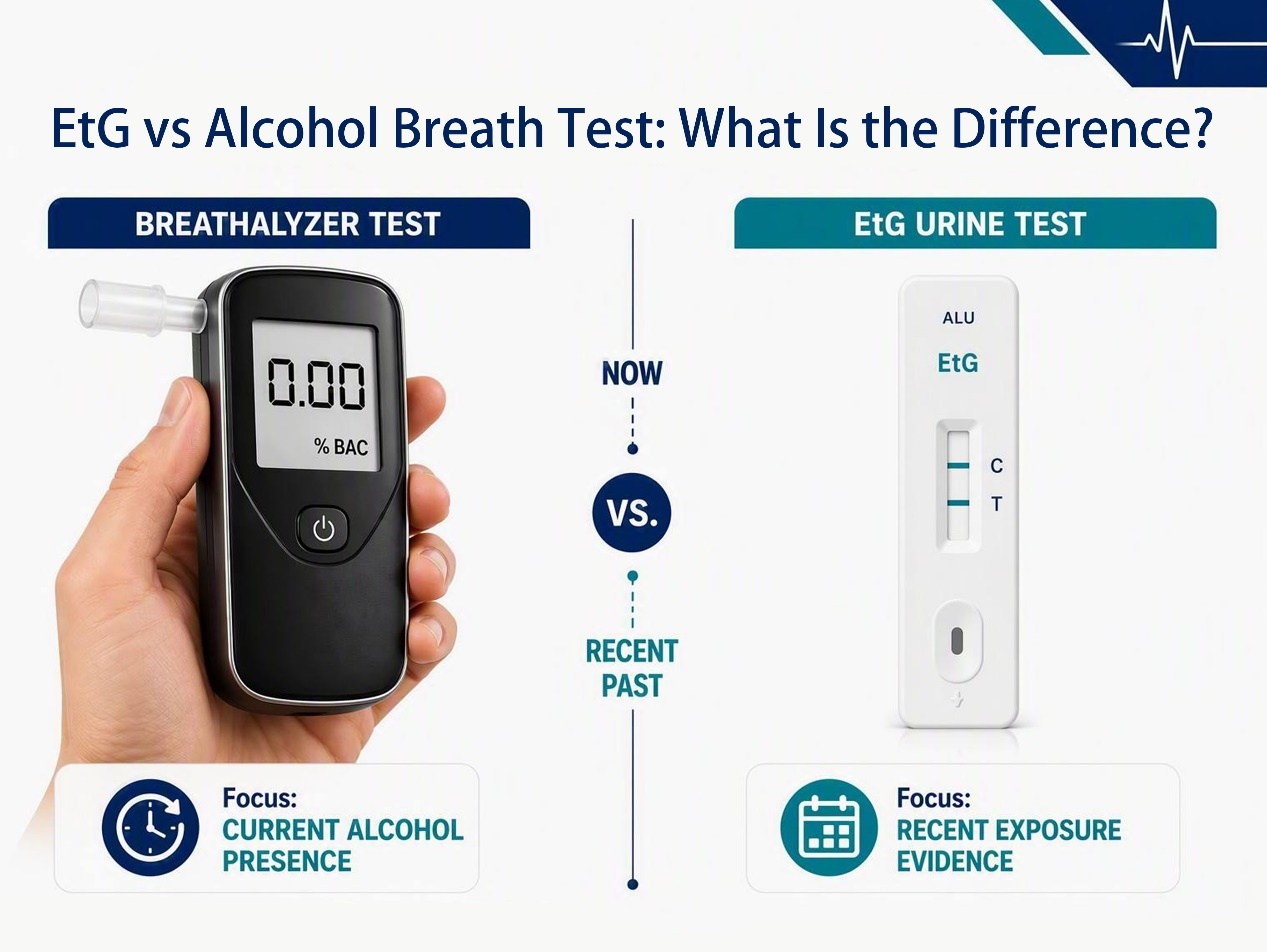
EtG vs alcohol breath tests measure alcohol exposure in different ways. This guide explains the key differences, detection windows, and testing applications, with insights from Antonmed as a professional diagnostic testing supplier.
EtG vs Alcohol Breath Test: What Is the Difference
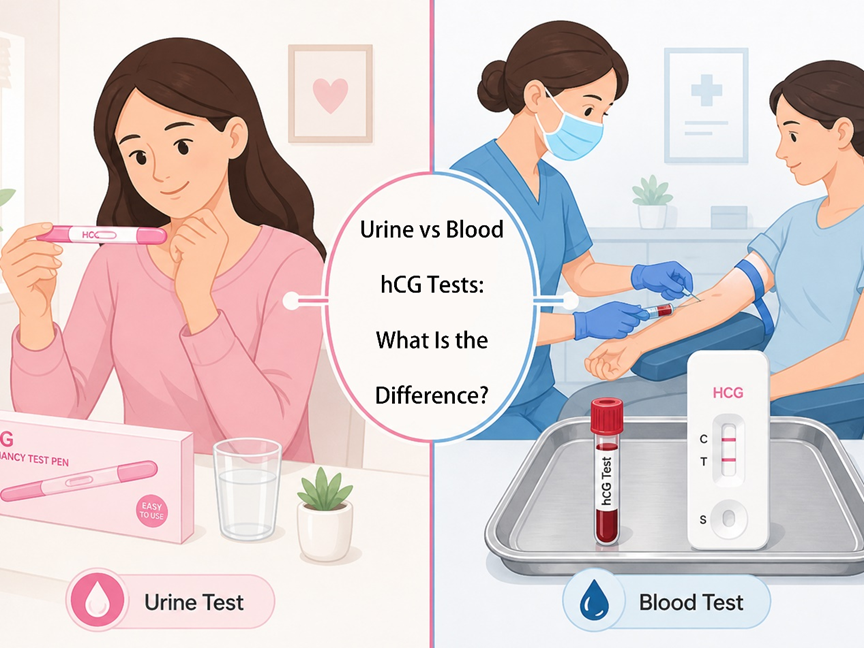
Urine and blood hCG tests both detect human chorionic gonadotropin (hCG), a hormone produced during pregnancy, but they differ in sensitivity, testing methods, timing, and practical use. This article explains the key differences between urine and blood hCG tests and helps readers understand when each testing method may be more appropriate.
Urine vs. Blood hCG Tests: What Is the Difference

Drug abuse remains a global public health and safety concern, making fast and reliable drug screening more important than ever. This article explains what Drugs of Abuse (DOA) are, the most commonly abused substances, how rapid drug tests work, typical detection windows, and the key applications of DOA testing in healthcare, workplaces, rehabilitation centers, and law enforcement.
What Are Drugs of Abuse

Wondering how many times a day you should take an ovulation test? Learn the best testing frequency, when to start using LH ovulation tests, how to avoid missing your LH surge, and tips for improving accuracy. Discover reliable OEM/ODM ovulation test solutions from Antonmed.
How Many Times a Day Should You Take an Ovulation Test