Urine vs. Blood hCG Tests: What Is the Difference
author: Antonmed
2026-08-25
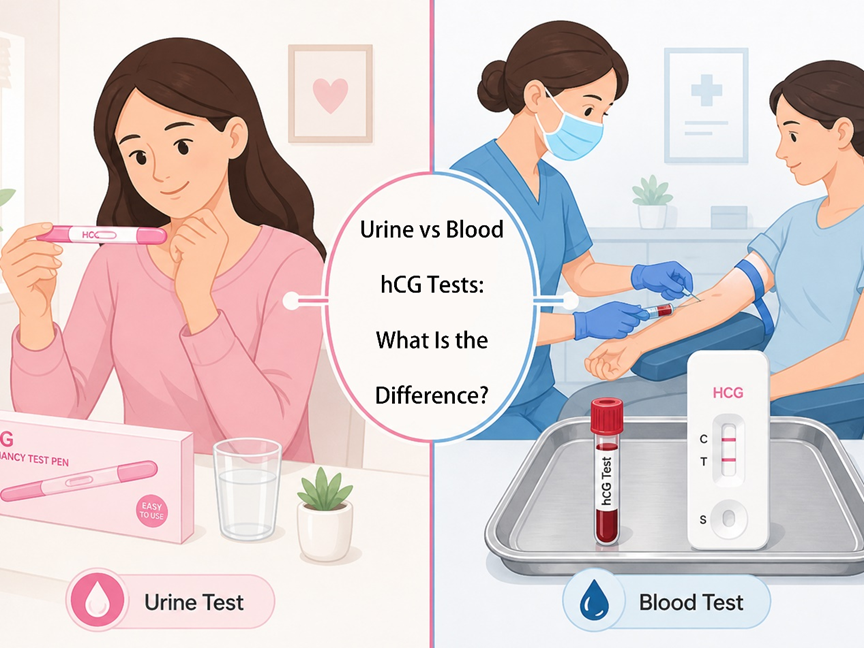
When people think about pregnancy testing, a urine test is probably the first thing that comes to mind. It is simple, fast, and can usually be performed at home without any special equipment. A blood test, on the other hand, is more commonly associated with hospitals, clinics, and laboratories.
Although both tests are designed to detect human chorionic gonadotropin (hCG), they are not interchangeable. The sample type, testing method, sensitivity, result format, and intended use can all be different.
Understanding these differences can help explain why a urine pregnancy test is often enough for an initial check, while a healthcare professional may recommend a blood hCG test when more detailed information is needed.
What Is hCG and Why Is It Tested?
hCG is a hormone produced after a fertilized egg implants in the uterus. During early pregnancy, hCG levels generally increase, which makes the hormone a useful biological marker for pregnancy detection.
Both urine and blood pregnancy tests look for this same hormone. The main difference is where the sample comes from and how the hCG is measured.
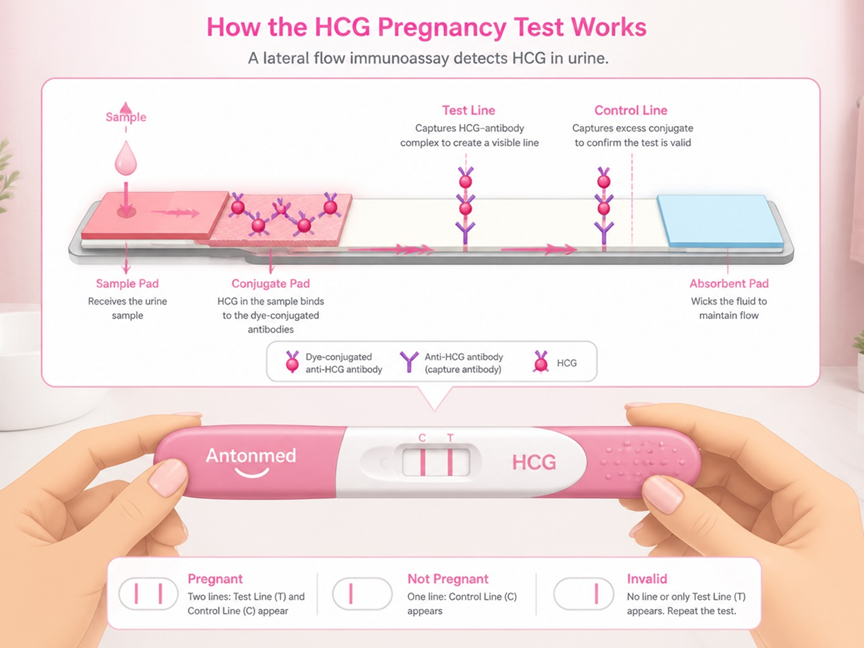
A urine pregnancy test detects hCG that has been filtered into the urine. Most home pregnancy test kits use an immunochromatographic, or lateral flow, method. When the urine sample is applied to the test device, hCG can react with specific antibodies within the test strip. If the concentration reaches the test's detection level, a visible test line appears.
Blood testing works with a sample of blood rather than urine. Depending on the test, it can provide either a qualitative result or a quantitative measurement of hCG concentration. This makes blood testing particularly useful when a healthcare provider needs more detailed information rather than simply a positive or negative answer.
How Is a Urine hCG Test Different?
The biggest advantage of urine testing is convenience. A urine pregnancy test can usually be performed without visiting a laboratory. This is why urine hCG tests are widely used for home pregnancy testing, pharmacies, clinics, and other point-of-care settings.
Most rapid urine pregnancy tests provide a qualitative result. In simple terms, the test determines whether hCG is present at or above a specific detection threshold. The result is generally interpreted as positive or negative, although some formats may use different visual indicators.
The timing of the test matters. If the test is taken very early, hCG levels may still be below the detection limit even if pregnancy has occurred. Urine concentration can also affect the result. For example, drinking a large amount of fluid shortly before testing can dilute the urine and potentially reduce the concentration of hCG in the sample.
This does not necessarily mean that urine pregnancy tests are unreliable. Rather, like any diagnostic test, they have a defined analytical sensitivity and should be used according to the manufacturer's instructions.
For everyday pregnancy screening, however, their simplicity is difficult to replace. A woman can perform the test privately, read the result within a short period, and decide whether further medical testing may be appropriate.
What Does a Blood hCG Test Tell You?
Blood testing takes a different approach.
Instead of looking for hCG in urine, a blood sample is collected and analyzed in a clinical or laboratory setting. Depending on the test method, the result can be qualitative or quantitative.
A qualitative blood test answers a similar question to a urine pregnancy test: is hCG detectable?
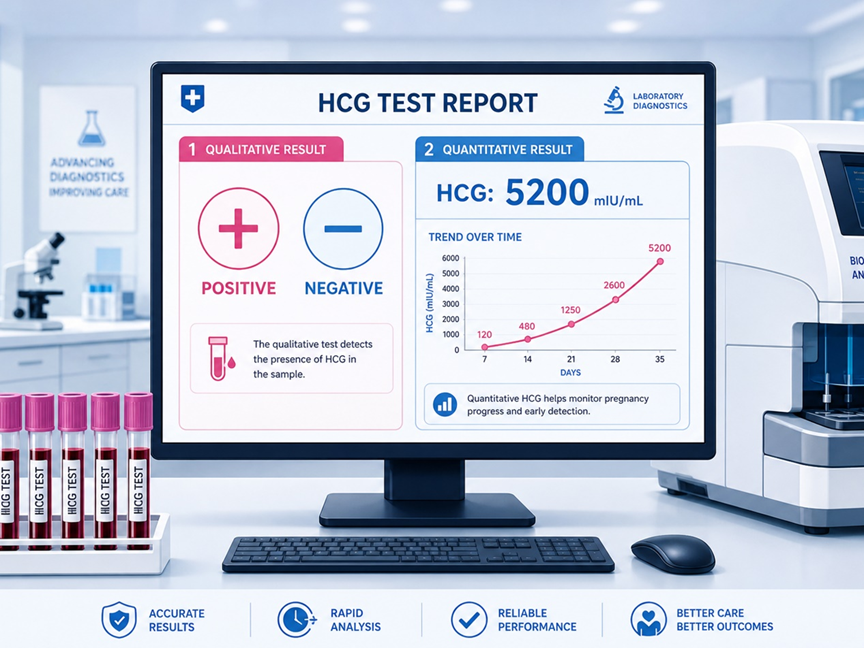
A quantitative blood test goes further by measuring the amount of hCG in the blood. This can provide healthcare professionals with more detailed information and may be useful when monitoring early pregnancy or investigating certain clinical situations.
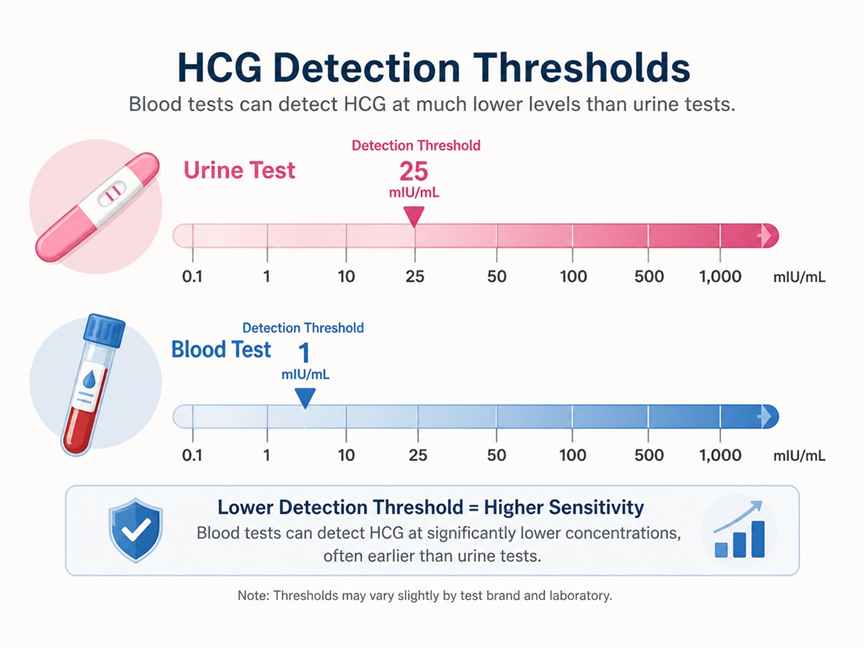
Because blood testing can detect lower concentrations of hCG with some laboratory methods, it may be able to identify pregnancy earlier than some urine tests. However, this does not mean that every blood test is automatically “better.” The appropriate test depends on the purpose of testing.
If someone simply wants to know whether pregnancy is likely, a rapid urine test may be sufficient. If a physician needs a specific hCG value or wants to monitor changes over time, quantitative blood testing may be more appropriate.
Which Test Is More Sensitive?
This is one of the most common questions when comparing urine and blood hCG tests.
In general, laboratory blood tests can detect lower levels of hCG than many home urine tests. This gives blood testing an advantage when very early detection or quantitative measurement is required.
But sensitivity should always be considered together with the intended use of the test.
A home pregnancy test is designed to provide a practical answer within a short period of time. It does not need to provide a precise hCG concentration. Its value lies in providing accessible screening outside a laboratory.
For this reason, comparing the two tests simply by asking which one is “more accurate” can be misleading. A better question is whether the test has the sensitivity, specificity, and performance characteristics required for its intended application.
Urine vs. Blood hCG Testing: When Is Each Used?
The choice between urine and blood testing often comes down to the situation.
Urine hCG testing is particularly suitable when convenience and rapid screening are important. It is commonly used for home pregnancy tests and point-of-care applications where a laboratory is not required.
Blood hCG testing is more appropriate when a healthcare professional needs additional information. Quantitative testing can provide an actual hCG concentration, allowing results to be followed over time when clinically indicated.
For example, a person who has missed a period may start with a home urine pregnancy test. If the result is unclear, symptoms do not match the result, or a healthcare professional believes further evaluation is necessary, additional testing may be recommended.
The two approaches should therefore not be viewed as competing technologies. They serve different purposes within the pregnancy testing process.
Can a Urine Pregnancy Test Be Negative While a Blood Test Is Positive?
Yes, this can happen, particularly during very early pregnancy.
The most common reason is that hCG has not yet reached the detection threshold of the urine test. Blood testing may be able to detect a lower concentration, depending on the assay used.
The timing of testing is therefore important. A negative urine result does not always rule out pregnancy if testing is performed very early. Other factors, such as diluted urine or incorrect test use, can also affect the result.
If pregnancy is still suspected after a negative result, following the test manufacturer's instructions and consulting a healthcare professional about whether repeat or additional testing is appropriate can provide a clearer answer.
What About Home Pregnancy Test Accuracy?
People often assume that a pregnancy test either works perfectly or does not. In reality, test performance depends on several factors.
The analytical sensitivity of the test is one. The concentration of hCG in the sample is another. Timing, sample quality, storage conditions, and correct operation can also influence the result.
This is why reputable manufacturers provide detailed instructions for sample collection, test operation, result interpretation, and storage. A well-designed test is only one part of reliable testing; it also needs to be used and stored correctly.
For manufacturers and distributors, these details are equally important when evaluating an hCG pregnancy test. Product performance should be considered alongside factors such as detection capability, stability, ease of use, packaging, quality control, and the intended market.
Which hCG Test Should You Choose?
There is no single answer for everyone.
If the goal is convenient and rapid pregnancy screening, a urine hCG test is often the more practical choice. It requires no blood collection and can be used in a home or point-of-care environment.
If a quantitative hCG value is required, or if a healthcare professional needs more detailed information for clinical assessment, blood testing may be preferred.
In other words, urine and blood hCG tests are best understood as two different approaches to the same biological marker. One focuses on accessibility and rapid screening, while the other can provide a more detailed measurement in a clinical setting.
For companies sourcing pregnancy diagnostic products, the same principle applies. The right product is not necessarily the one with the most complicated technology, but the one that matches the intended application and testing environment.
Behind a simple pregnancy test is a combination of antibody technology, membrane materials, manufacturing processes, quality control, and product design. Consistent performance depends on how these elements work together throughout production.
This is particularly important for distributors, importers, laboratories, clinics, and brands looking for private-label or OEM pregnancy testing products. Product specifications are only the starting point; manufacturing consistency and quality management also matter when a test is expected to perform reliably across different batches.
Antonmed develops and supplies rapid diagnostic products, including hCG pregnancy test kits, with a focus on consistent manufacturing, product development, and support for international customers. Its experience across rapid diagnostic testing allows the company to work with different product requirements, from standard pregnancy test formats to customized solutions for overseas markets.
For buyers comparing urine hCG test suppliers, the goal is ultimately straightforward: find a product that is technically appropriate for its intended use, consistently manufactured, and supported by a supplier that understands the requirements of the diagnostic market.
Urine and blood hCG tests may use the same pregnancy marker, but they answer different testing needs. Understanding that distinction is the first step toward choosing the right testing solution.
EtG vs Alcohol Breath Test: What Is the Difference
What Are Drugs of Abuse
Related Article
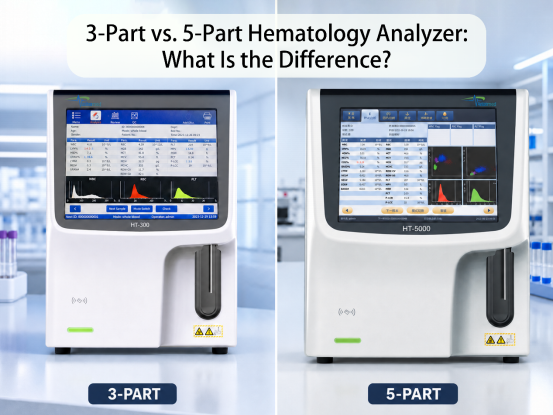
Learn the differences between 3-part and 5-part hematology analyzers, including WBC differential, applications, workload, cost, maintenance, and purchasing considerations.
3-Part vs. 5-Part Hematology Analyzer: What Is the Difference?

Learn what reagents are used in hematology analyzers, including diluent, lyse reagent, hemoglobin reagent, and cleaner, plus key compatibility and purchasing considerations.
What Reagents Are Used in a Hematology Analyzer