
What is POCT and Why is It Important
author: Antonmed
2026-05-17
In today's healthcare environment, speed and efficiency are becoming more important than ever. Patients no longer want to wait hours—or even days—for test results, especially when timely diagnosis can directly impact treatment decisions. At the same time, healthcare providers are under increasing pressure to improve workflow efficiency, reduce patient waiting times, and deliver more accessible medical services.
Traditional laboratory testing often requires sample transportation, centralized processing, and extended turnaround times. While this model is still essential for many complex diagnostics, it may not always be practical for urgent clinical decisions or decentralized healthcare settings. This challenge has driven the rapid growth of POCT (Point-of-Care Testing), a testing approach designed to bring diagnostics closer to the patient and provide fast, actionable results.
Today, POCT is widely used across hospitals, clinics, pharmacies, community healthcare centers, and home care settings. From infectious disease screening and blood glucose monitoring to drug abuse testing and pregnancy testing, POCT has become an essential part of modern healthcare delivery. This is also why search interest in terms such as point of care testing, POCT diagnostics, and rapid diagnostic tests continues to grow globally.
What Is POCT?
POCT stands for Point-of-Care Testing, a medical testing approach that allows diagnostic tests to be performed directly at or near the site of patient care. Instead of sending samples to a centralized laboratory and waiting for results, healthcare professionals can carry out testing on-site and obtain results within minutes, enabling faster diagnosis and more immediate clinical decisions.
POCT stands for Point-of-Care Testing, a medical testing approach that allows diagnostic tests to be performed directly at or near the site of patient care. Instead of sending samples to a centralized laboratory and waiting for results, healthcare professionals can carry out testing on-site and obtain results within minutes, enabling faster diagnosis and more immediate clinical decisions.
The core value of POCT lies in its speed, convenience, and accessibility. By simplifying the testing process and reducing dependence on complex laboratory infrastructure, POCT makes diagnostic services more efficient in both traditional healthcare settings and decentralized medical environments. This is particularly valuable in emergency care, outpatient clinics, pharmacies, community healthcare centers, and remote regions where timely diagnosis is critical.
Common examples of POCT products include everyday diagnostic tools that many people are already familiar with, such as pregnancy tests, blood glucose meters, infectious disease rapid tests, COVID-19 rapid antigen tests, influenza A/B tests, and drug abuse screening tests. These products are widely used because they offer simple operation, fast turnaround times, and actionable results without requiring highly specialized equipment.
As global healthcare systems continue moving toward faster and more patient-centered services, POCT is becoming an increasingly important part of modern diagnostics. This is also why search interest for terms such as point of care testing, POCT diagnostics, and rapid diagnostic tests continues to rise worldwide.
How Does POCT Work?
POCT is designed to deliver fast and convenient diagnostic results directly at or near the patient care site. Unlike traditional laboratory testing, which often requires sample transportation, centralized analysis, and longer turnaround times, point-of-care testing simplifies the entire diagnostic process and significantly reduces waiting time.
Most POCT products rely on rapid diagnostic technologies such as lateral flow immunoassay, colloidal gold technology, fluorescence immunoassay, and molecular diagnostics. These technologies are widely used in modern healthcare because they combine speed, ease of use, and reliable performance. For example, lateral flow assays and colloidal gold tests are commonly used in pregnancy tests, infectious disease rapid tests, and drug screening kits, while fluorescence and molecular diagnostics are often applied in higher-sensitivity clinical testing.
The typical POCT workflow is straightforward and user-friendly. Healthcare professionals first collect a sample, which may include blood, urine, saliva, nasal swabs, or throat swabs depending on the test type. The sample is then applied to the testing device, where the built-in reagents react with the target analyte. Finally, results are interpreted visually or through a dedicated POCT analyzer. In most cases, results can be obtained within 5 to 15 minutes, allowing clinicians to make faster treatment decisions and improve patient management efficiency.
POCT is designed to deliver fast and convenient diagnostic results directly at or near the patient care site. Unlike traditional laboratory testing, which often requires sample transportation, centralized analysis, and longer turnaround times, point-of-care testing simplifies the entire diagnostic process and significantly reduces waiting time.
Most POCT products rely on rapid diagnostic technologies such as lateral flow immunoassay, colloidal gold technology, fluorescence immunoassay, and molecular diagnostics. These technologies are widely used in modern healthcare because they combine speed, ease of use, and reliable performance. For example, lateral flow assays and colloidal gold tests are commonly used in pregnancy tests, infectious disease rapid tests, and drug screening kits, while fluorescence and molecular diagnostics are often applied in higher-sensitivity clinical testing.
The typical POCT workflow is straightforward and user-friendly. Healthcare professionals first collect a sample, which may include blood, urine, saliva, nasal swabs, or throat swabs depending on the test type. The sample is then applied to the testing device, where the built-in reagents react with the target analyte. Finally, results are interpreted visually or through a dedicated POCT analyzer. In most cases, results can be obtained within 5 to 15 minutes, allowing clinicians to make faster treatment decisions and improve patient management efficiency.
Why Is POCT Important?
POCT has become an essential part of modern healthcare because it enables faster, more efficient, and more accessible diagnostic services. Compared with traditional laboratory testing, which often requires sample transportation and longer turnaround times, Point-of-Care Testing allows medical professionals to obtain results directly at or near the patient site. This significantly shortens the diagnostic process and supports faster clinical decision-making.
One of the biggest advantages of POCT is speed. Rapid results allow clinicians to diagnose and initiate treatment much earlier, which is especially critical in environments such as emergency rooms, urgent care centers, and outpatient clinics where timely intervention can directly impact patient outcomes. For infectious diseases, cardiac events, or acute conditions, receiving results within minutes rather than hours can make a significant difference in treatment efficiency.
POCT also greatly improves the patient experience. Since results are available during the same visit, patients can avoid repeated appointments, reduce waiting anxiety, and receive faster treatment recommendations. This not only improves patient satisfaction but can also enhance treatment compliance, as patients are more likely to follow medical advice when diagnosis and consultation happen in a single visit.
Another major benefit of POCT is improved healthcare accessibility. In many regions where laboratory infrastructure is limited, such as rural healthcare facilities, community clinics, pharmacies, and mobile testing units, POCT provides practical and cost-effective diagnostic support. This makes healthcare services more accessible to underserved populations and helps expand diagnostic coverage beyond traditional hospitals.
In addition, POCT helps reduce healthcare costs by minimizing unnecessary hospital visits, repeated testing, and delays in diagnosis. Faster results can improve workflow efficiency, optimize resource allocation, and lower operational burdens for healthcare providers. As a result, POCT is increasingly recognized as a valuable solution for improving both clinical efficiency and healthcare system sustainability.
POCT has become an essential part of modern healthcare because it enables faster, more efficient, and more accessible diagnostic services. Compared with traditional laboratory testing, which often requires sample transportation and longer turnaround times, Point-of-Care Testing allows medical professionals to obtain results directly at or near the patient site. This significantly shortens the diagnostic process and supports faster clinical decision-making.
One of the biggest advantages of POCT is speed. Rapid results allow clinicians to diagnose and initiate treatment much earlier, which is especially critical in environments such as emergency rooms, urgent care centers, and outpatient clinics where timely intervention can directly impact patient outcomes. For infectious diseases, cardiac events, or acute conditions, receiving results within minutes rather than hours can make a significant difference in treatment efficiency.
POCT also greatly improves the patient experience. Since results are available during the same visit, patients can avoid repeated appointments, reduce waiting anxiety, and receive faster treatment recommendations. This not only improves patient satisfaction but can also enhance treatment compliance, as patients are more likely to follow medical advice when diagnosis and consultation happen in a single visit.
Another major benefit of POCT is improved healthcare accessibility. In many regions where laboratory infrastructure is limited, such as rural healthcare facilities, community clinics, pharmacies, and mobile testing units, POCT provides practical and cost-effective diagnostic support. This makes healthcare services more accessible to underserved populations and helps expand diagnostic coverage beyond traditional hospitals.
In addition, POCT helps reduce healthcare costs by minimizing unnecessary hospital visits, repeated testing, and delays in diagnosis. Faster results can improve workflow efficiency, optimize resource allocation, and lower operational burdens for healthcare providers. As a result, POCT is increasingly recognized as a valuable solution for improving both clinical efficiency and healthcare system sustainability.
Common Applications of POCT
POCT has become an essential part of modern healthcare because of its speed, convenience, and flexibility. From hospitals to pharmacies and workplace screening programs, point-of-care testing is now widely adopted across a variety of healthcare and diagnostic settings.
Hospitals and Clinics
Hospitals and clinics are among the most common users of POCT products. In busy clinical environments, rapid results are critical for improving workflow efficiency and supporting faster medical decisions. Healthcare providers often use POCT for infectious disease screening, blood glucose monitoring, and cardiac marker testing, allowing physicians to quickly assess patient conditions and begin treatment without waiting for centralized laboratory reports.
For example, rapid influenza tests, blood glucose meters, and cardiac troponin tests are widely used in emergency departments, outpatient clinics, and bedside care.
Pharmacies and Retail Testing
POCT is also expanding rapidly in pharmacies and retail healthcare settings. Many pharmacies now offer convenient on-site testing services, allowing patients to receive quick results without scheduling a hospital appointment. Common pharmacy-based POCT services include flu tests, strep tests, and COVID-19 rapid tests.
This model improves healthcare accessibility while reducing pressure on hospitals and clinics, especially during peak respiratory illness seasons. Retail testing is becoming increasingly popular as consumers seek faster and more convenient diagnostic solutions.
Workplace and Drug Testing
Beyond traditional healthcare, POCT is widely used in workplace screening and drug testing programs. Employers and occupational health providers rely on rapid testing solutions for workplace drug screening, alcohol testing, and drug abuse rapid tests to ensure compliance with safety policies and industry regulations.
POCT drug tests are particularly common in industries such as transportation, manufacturing, logistics, construction, and healthcare, where employee safety and compliance are critical. Rapid on-site testing helps organizations reduce turnaround time and make timely screening decisions.
POCT has become an essential part of modern healthcare because of its speed, convenience, and flexibility. From hospitals to pharmacies and workplace screening programs, point-of-care testing is now widely adopted across a variety of healthcare and diagnostic settings.
Hospitals and Clinics
Hospitals and clinics are among the most common users of POCT products. In busy clinical environments, rapid results are critical for improving workflow efficiency and supporting faster medical decisions. Healthcare providers often use POCT for infectious disease screening, blood glucose monitoring, and cardiac marker testing, allowing physicians to quickly assess patient conditions and begin treatment without waiting for centralized laboratory reports.
For example, rapid influenza tests, blood glucose meters, and cardiac troponin tests are widely used in emergency departments, outpatient clinics, and bedside care.
Pharmacies and Retail Testing
POCT is also expanding rapidly in pharmacies and retail healthcare settings. Many pharmacies now offer convenient on-site testing services, allowing patients to receive quick results without scheduling a hospital appointment. Common pharmacy-based POCT services include flu tests, strep tests, and COVID-19 rapid tests.
This model improves healthcare accessibility while reducing pressure on hospitals and clinics, especially during peak respiratory illness seasons. Retail testing is becoming increasingly popular as consumers seek faster and more convenient diagnostic solutions.
Workplace and Drug Testing
Beyond traditional healthcare, POCT is widely used in workplace screening and drug testing programs. Employers and occupational health providers rely on rapid testing solutions for workplace drug screening, alcohol testing, and drug abuse rapid tests to ensure compliance with safety policies and industry regulations.
POCT drug tests are particularly common in industries such as transportation, manufacturing, logistics, construction, and healthcare, where employee safety and compliance are critical. Rapid on-site testing helps organizations reduce turnaround time and make timely screening decisions.
POCT is reshaping modern healthcare by making diagnostic testing faster, more accessible, and more efficient. With the ability to deliver rapid results directly at the point of care, healthcare providers can shorten diagnosis time, improve workflow efficiency, and make timely treatment decisions for patients. As medical systems continue to move toward convenience and decentralized care, point-of-care testing is no longer just an alternative to traditional laboratory testing, but an essential part of everyday clinical practice.
From hospitals and clinics to pharmacies, workplace screening programs, and home healthcare, POCT solutions are being adopted across a growing range of applications worldwide. For businesses seeking reliable POCT products, rapid diagnostic tests, or customized OEM and ODM solutions, Antonmed offers professional support backed by stable product quality, industry expertise, and global service experience.
From hospitals and clinics to pharmacies, workplace screening programs, and home healthcare, POCT solutions are being adopted across a growing range of applications worldwide. For businesses seeking reliable POCT products, rapid diagnostic tests, or customized OEM and ODM solutions, Antonmed offers professional support backed by stable product quality, industry expertise, and global service experience.
How Does a Hematology Analyzer Work
How Long Does THC Stay in Urine
Related Article
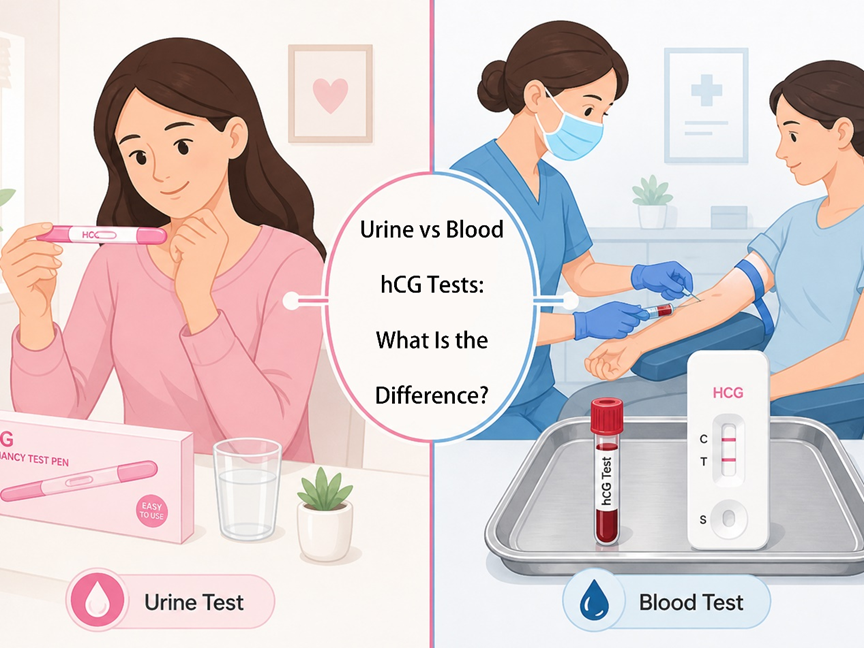
Urine and blood hCG tests both detect human chorionic gonadotropin (hCG), a hormone produced during pregnancy, but they differ in sensitivity, testing methods, timing, and practical use. This article explains the key differences between urine and blood hCG tests and helps readers understand when each testing method may be more appropriate.
Urine vs. Blood hCG Tests: What Is the Difference

Drug abuse remains a global public health and safety concern, making fast and reliable drug screening more important than ever. This article explains what Drugs of Abuse (DOA) are, the most commonly abused substances, how rapid drug tests work, typical detection windows, and the key applications of DOA testing in healthcare, workplaces, rehabilitation centers, and law enforcement.
What Are Drugs of Abuse

Wondering how many times a day you should take an ovulation test? Learn the best testing frequency, when to start using LH ovulation tests, how to avoid missing your LH surge, and tips for improving accuracy. Discover reliable OEM/ODM ovulation test solutions from Antonmed.
How Many Times a Day Should You Take an Ovulation Test