
How to Choose a Hematology Analyzer
author: Antonmed
2026-06-01
In today's healthcare environment, laboratories are under increasing pressure to deliver faster results, maintain high levels of accuracy, and handle growing testing volumes. Whether performing routine health screenings, monitoring chronic diseases, or supporting critical clinical decisions, reliable blood analysis has become an essential part of modern diagnostics. As a result, the hematology analyzer is now one of the most important instruments in hospitals, clinics, diagnostic laboratories, and healthcare centers worldwide.
However, choosing the right hematology analyzer is not always straightforward. The market offers a wide range of options, from compact 3-part hematology analyzers designed for small clinics to advanced 5-part systems capable of handling high-throughput laboratory testing. Differences in analytical technology, testing parameters, throughput capacity, reagent costs, and automation levels can make the selection process complex, especially for first-time buyers or facilities planning an equipment upgrade.
A hematology analyzer is a long-term investment that directly affects laboratory efficiency, operational costs, and the quality of patient care. Selecting a system that aligns with your testing requirements today—while also supporting future growth—can help maximize return on investment and ensure consistent diagnostic performance for years to come.
In this guide, we'll explore the key factors to consider when choosing a hematology analyzer, helping hospitals, laboratories, clinics, and distributors identify the most suitable solution for their specific needs.
Understand Your Testing Needs First
Before comparing different hematology analyzer models, specifications, and prices, the most important step is to clearly understand your laboratory's actual testing requirements. A hematology analyzer that performs well in a large hospital may not necessarily be the best choice for a community clinic, and an analyzer designed for high-volume laboratories could be more than what a small practice truly needs.
Before making a purchasing decision, it is worth taking time to evaluate several practical factors. For example, how many samples are processed each day? What types of patients does the facility serve? Is routine CBC testing sufficient, or do clinicians require detailed white blood cell differential results for more complex diagnoses? Understanding these questions will help narrow down the available options and ensure that the selected analyzer matches both current and future testing needs.
In addition to clinical requirements, laboratories should also consider anticipated growth. Many facilities initially purchase equipment based on their current workload, only to find that testing demand increases significantly a few years later. Choosing a scalable solution can help avoid costly equipment upgrades in the future.
For smaller clinics, physician offices, and community healthcare centers, a compact CBC analyzer with reliable routine testing capabilities is often sufficient. These facilities typically prioritize ease of use, affordability, and low maintenance requirements. In contrast, large hospitals, diagnostic laboratories, and high-volume testing centers usually require higher throughput, expanded parameter menus, and advanced cell classification capabilities to support a broader range of clinical applications.
Ultimately, the best hematology analyzer is not necessarily the most advanced model on the market, but the one that aligns most closely with your workload, diagnostic requirements, and long-term operational goals.
Before comparing different hematology analyzer models, specifications, and prices, the most important step is to clearly understand your laboratory's actual testing requirements. A hematology analyzer that performs well in a large hospital may not necessarily be the best choice for a community clinic, and an analyzer designed for high-volume laboratories could be more than what a small practice truly needs.
Before making a purchasing decision, it is worth taking time to evaluate several practical factors. For example, how many samples are processed each day? What types of patients does the facility serve? Is routine CBC testing sufficient, or do clinicians require detailed white blood cell differential results for more complex diagnoses? Understanding these questions will help narrow down the available options and ensure that the selected analyzer matches both current and future testing needs.
In addition to clinical requirements, laboratories should also consider anticipated growth. Many facilities initially purchase equipment based on their current workload, only to find that testing demand increases significantly a few years later. Choosing a scalable solution can help avoid costly equipment upgrades in the future.
For smaller clinics, physician offices, and community healthcare centers, a compact CBC analyzer with reliable routine testing capabilities is often sufficient. These facilities typically prioritize ease of use, affordability, and low maintenance requirements. In contrast, large hospitals, diagnostic laboratories, and high-volume testing centers usually require higher throughput, expanded parameter menus, and advanced cell classification capabilities to support a broader range of clinical applications.
Ultimately, the best hematology analyzer is not necessarily the most advanced model on the market, but the one that aligns most closely with your workload, diagnostic requirements, and long-term operational goals.
Choose Between a 3-Part and 5-Part Hematology Analyzer
One of the most important decisions when selecting a hematology analyzer is determining whether a 3-part hematology analyzer or a 5-part hematology analyzer is the better fit for your laboratory. The right choice depends largely on your testing volume, clinical requirements, budget, and the level of diagnostic detail needed by healthcare professionals.
For facilities primarily performing routine CBC testing, a 3-part analyzer often provides an excellent balance between efficiency and cost-effectiveness. However, laboratories handling more complex clinical cases may benefit from the additional diagnostic information offered by a 5-part system.
1. 3-Part Hematology Analyzer
A 3-part hematology analyzer classifies white blood cells into three major groups: lymphocytes, monocytes, and granulocytes. This level of differentiation is sufficient for most routine hematology testing and is widely used in primary healthcare settings.
Because of their simpler analytical design, 3-part analyzers are generally easier to operate, require less maintenance, and have lower reagent consumption.
Due to their affordability, ease of operation, and lower maintenance requirements, 3-part hematology analyzers are widely used in clinics, physician offices, community hospitals, routine health screening centers, and small to medium-sized laboratories. For healthcare facilities primarily focused on routine CBC testing, these systems provide a practical and cost-effective solution while maintaining reliable analytical performance.
For facilities with moderate daily workloads and limited budgets, a 3-part hematology analyzer is often a practical and cost-efficient choice.
2. 5-Part Hematology Analyzer
A 5-part hematology analyzer offers a more advanced level of white blood cell differentiation. In addition to lymphocytes and monocytes, it separately identifies neutrophils, eosinophils, and basophils, providing a complete five-part differential count.
This additional information can be extremely valuable for diagnosing infections, inflammatory conditions, allergic reactions, hematological disorders, and other complex medical conditions.
As a result, 5-part hematology analyzers are widely used in general hospitals, specialized medical centers, diagnostic laboratories, and research institutions where detailed white blood cell differentiation is essential for clinical diagnosis, disease monitoring, and advanced laboratory testing. Their ability to provide more comprehensive hematological information makes them a preferred choice for facilities handling complex patient cases and higher-level diagnostic requirements.
Although the initial investment and operating costs are typically higher, a 5-part hematology analyzer can provide greater clinical insight and support more advanced diagnostic applications.
Which One Should You Choose?
If your primary goal is routine CBC testing with reliable performance and lower operating costs, a 3-part analyzer is often sufficient. However, if your laboratory requires detailed white blood cell analysis and handles a broader range of clinical cases, investing in a 5-part hematology analyzer may deliver greater long-term value.
Evaluate Throughput Requirements
Throughput refers to the number of samples an analyzer can process per hour. A laboratory handling 20 samples per day has very different needs from one processing hundreds of samples daily.
Typical throughput requirements vary depending on the size and workload of the healthcare facility. For example, clinics and small healthcare centers often require analyzers capable of processing 30 to 60 tests per hour, while hospitals generally benefit from systems with a throughput of 60 to 120 tests per hour. Large diagnostic laboratories and high-volume testing centers may require analyzers that can handle more than 120 samples per hour to meet daily testing demands. Selecting an analyzer with the appropriate throughput is essential for maintaining efficient laboratory operations, ensuring timely result delivery, and avoiding both underutilization and capacity bottlenecks as testing volumes grow.
Throughput refers to the number of samples an analyzer can process per hour. A laboratory handling 20 samples per day has very different needs from one processing hundreds of samples daily.
Typical throughput requirements vary depending on the size and workload of the healthcare facility. For example, clinics and small healthcare centers often require analyzers capable of processing 30 to 60 tests per hour, while hospitals generally benefit from systems with a throughput of 60 to 120 tests per hour. Large diagnostic laboratories and high-volume testing centers may require analyzers that can handle more than 120 samples per hour to meet daily testing demands. Selecting an analyzer with the appropriate throughput is essential for maintaining efficient laboratory operations, ensuring timely result delivery, and avoiding both underutilization and capacity bottlenecks as testing volumes grow.
Consider Accuracy and Reliability
Accuracy is one of the most important factors when selecting a blood analyzer machine. A reliable hematology analyzer should deliver consistent and accurate results across repeated tests, ensuring confidence in clinical decision-making. It should also maintain low carryover rates to minimize sample-to-sample contamination, especially in high-volume laboratory environments. In addition, strong quality control performance is essential for maintaining testing accuracy and meeting laboratory standards. Equally important is the analyzer's ability to provide stable long-term operation, reducing downtime and helping laboratories maintain efficient daily workflows while ensuring dependable diagnostic results.
Accurate results help clinicians make better treatment decisions and improve patient outcomes.
Accuracy is one of the most important factors when selecting a blood analyzer machine. A reliable hematology analyzer should deliver consistent and accurate results across repeated tests, ensuring confidence in clinical decision-making. It should also maintain low carryover rates to minimize sample-to-sample contamination, especially in high-volume laboratory environments. In addition, strong quality control performance is essential for maintaining testing accuracy and meeting laboratory standards. Equally important is the analyzer's ability to provide stable long-term operation, reducing downtime and helping laboratories maintain efficient daily workflows while ensuring dependable diagnostic results.
Accurate results help clinicians make better treatment decisions and improve patient outcomes.
Look Beyond the Purchase Price
Many buyers focus solely on the hematology analyzer price, but long-term operating costs are equally important.
When evaluating the total cost of ownership, it is important to look beyond the initial purchase price of the hematology analyzer. Factors such as reagent costs, routine maintenance expenses, calibration requirements, technical service support, and the availability of spare parts can all have a significant impact on long-term operating costs. An analyzer with a lower upfront price may appear attractive at first, but higher reagent consumption, limited service coverage, or difficulties in obtaining replacement parts can lead to increased expenses over time. Carefully assessing these ongoing costs will help laboratories make a more informed investment and ensure stable operation throughout the instrument’s lifecycle. A lower purchase price may not always result in lower overall ownership costs.
Many buyers focus solely on the hematology analyzer price, but long-term operating costs are equally important.
When evaluating the total cost of ownership, it is important to look beyond the initial purchase price of the hematology analyzer. Factors such as reagent costs, routine maintenance expenses, calibration requirements, technical service support, and the availability of spare parts can all have a significant impact on long-term operating costs. An analyzer with a lower upfront price may appear attractive at first, but higher reagent consumption, limited service coverage, or difficulties in obtaining replacement parts can lead to increased expenses over time. Carefully assessing these ongoing costs will help laboratories make a more informed investment and ensure stable operation throughout the instrument’s lifecycle. A lower purchase price may not always result in lower overall ownership costs.
Evaluate Ease of Use and Workflow
Modern laboratories increasingly value automation and workflow efficiency.
Modern laboratories increasingly value automation and workflow efficiency.
When evaluating the usability of a hematology analyzer, it is important to look beyond analytical performance and consider features that can improve daily workflow efficiency. Modern systems often include touchscreen operation, automatic sample aspiration, and automatic cleaning functions, which help simplify routine procedures and reduce manual intervention. In addition, LIS (Laboratory Information System) connectivity enables seamless data transfer between the analyzer and laboratory management systems, while an intuitive software interface allows operators to navigate functions easily and minimize training time. These user-friendly features can significantly enhance laboratory productivity, reduce operational errors, and improve the overall testing experience.
User-friendly analyzers help reduce training time and minimize operational errors.
When selecting a hematology analyzer, many buyers focus on technical specifications, testing parameters, and purchase costs. However, the quality of supplier support can be just as important as the performance of the instrument itself. A hematology analyzer is a long-term investment, and its reliability depends not only on the equipment but also on the service network behind it.
From installation and operator training to reagent supply and ongoing technical assistance, professional support helps ensure that the analyzer continues to perform efficiently throughout its lifecycle. When unexpected issues arise, timely troubleshooting and responsive after-sales service can significantly reduce downtime and prevent disruptions to laboratory operations. For healthcare facilities that rely on consistent daily testing, having a dependable supplier means greater confidence, smoother workflows, and improved operational efficiency over the long term.
From installation and operator training to reagent supply and ongoing technical assistance, professional support helps ensure that the analyzer continues to perform efficiently throughout its lifecycle. When unexpected issues arise, timely troubleshooting and responsive after-sales service can significantly reduce downtime and prevent disruptions to laboratory operations. For healthcare facilities that rely on consistent daily testing, having a dependable supplier means greater confidence, smoother workflows, and improved operational efficiency over the long term.
At Antonmed, we understand that different healthcare facilities have different testing requirements. That's why we offer a range of hematology analyzers designed for clinics, hospitals, laboratories, and healthcare distributors. With reliable performance, user-friendly operation, and global technical support, Antonmed helps healthcare providers improve diagnostic efficiency and laboratory productivity.
Choosing the right hematology analyzer requires careful consideration of testing volume, clinical requirements, analyzer type, operating costs, and supplier support. By evaluating these factors, laboratories and healthcare facilities can select a solution that delivers both reliable performance and long-term value.
Whether you need a compact analyzer for a clinic or an advanced system for a high-volume laboratory, selecting the right partner is just as important as selecting the right instrument.
Whether you need a compact analyzer for a clinic or an advanced system for a high-volume laboratory, selecting the right partner is just as important as selecting the right instrument.
What Factors Affect Hematology Analyzer Accuracy
How Does a Hematology Analyzer Work
Related Article
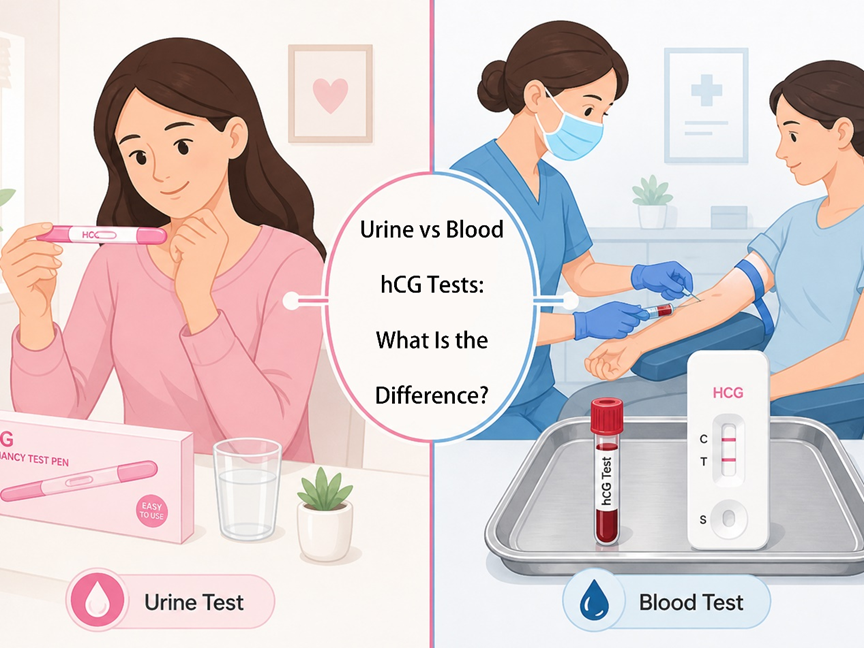
Urine and blood hCG tests both detect human chorionic gonadotropin (hCG), a hormone produced during pregnancy, but they differ in sensitivity, testing methods, timing, and practical use. This article explains the key differences between urine and blood hCG tests and helps readers understand when each testing method may be more appropriate.
Urine vs. Blood hCG Tests: What Is the Difference

Drug abuse remains a global public health and safety concern, making fast and reliable drug screening more important than ever. This article explains what Drugs of Abuse (DOA) are, the most commonly abused substances, how rapid drug tests work, typical detection windows, and the key applications of DOA testing in healthcare, workplaces, rehabilitation centers, and law enforcement.
What Are Drugs of Abuse

Wondering how many times a day you should take an ovulation test? Learn the best testing frequency, when to start using LH ovulation tests, how to avoid missing your LH surge, and tips for improving accuracy. Discover reliable OEM/ODM ovulation test solutions from Antonmed.
How Many Times a Day Should You Take an Ovulation Test