
How to Use Urine Test Strips?
author: Antonmed
2026-03-05

Urine testing is one of the simplest and most widely used diagnostic methods in modern healthcare. Urine test strips, also known as urinalysis dipstick or urine reagent strips, allow quick screening for various health conditions such as urinary tract infections, kidney disease, and diabetes. Understanding how to use urine test strips correctly ensures more reliable test results and better health monitoring.
What Are Urine Test Strips?
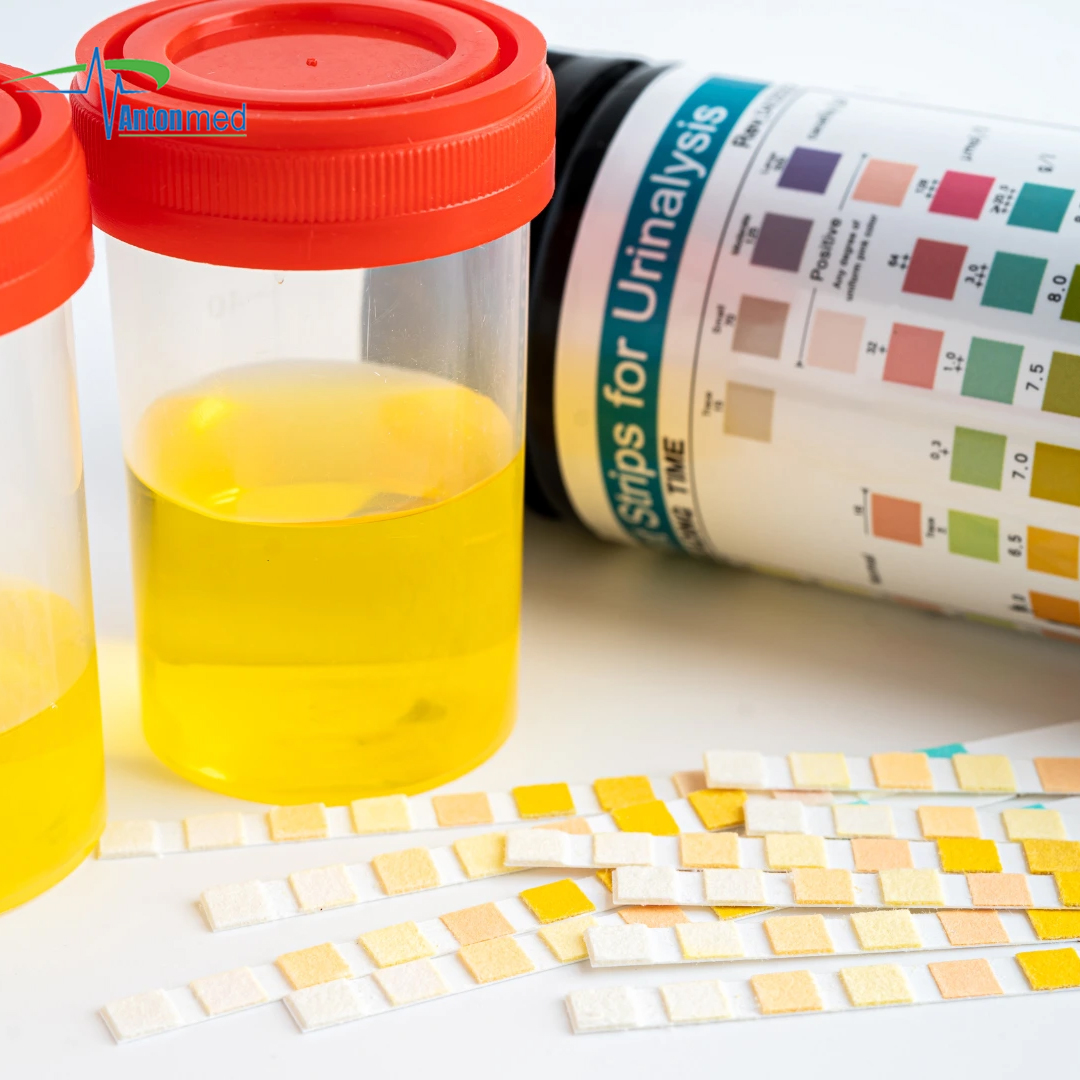
Urine test strips are thin plastic strips containing multiple chemical reagent pads. Each pad reacts with specific substances in urine and changes color to indicate the presence of certain biomarkers.
These urine reagent strips are widely used in hospitals, clinics, laboratories, and even home testing environments because they provide quick and convenient results.
Urine test strips are thin plastic strips containing multiple chemical reagent pads. Each pad reacts with specific substances in urine and changes color to indicate the presence of certain biomarkers.
These urine reagent strips are widely used in hospitals, clinics, laboratories, and even home testing environments because they provide quick and convenient results.
Step-by-Step Guide: How to Use Urine Test Strips
Using a urinalysis dipstick test is simple, but following the correct procedure is important for accurate results.
Step 1: Collect a Urine Sample
Collect fresh urine in a clean and dry container. For best results, use a midstream urine sample.
Step 2: Dip the urine test strip.
Take one strip from the container and dip the urinalysis dipstick briefly into the urine sample for about 1–2 seconds. Make sure all reagent pads are fully immersed.
Take one strip from the container and dip the urinalysis dipstick briefly into the urine sample for about 1–2 seconds. Make sure all reagent pads are fully immersed.
Step 3: Remove Excess Urine
Remove the strip and gently tap it against the container to remove excess urine.
Remove the strip and gently tap it against the container to remove excess urine.
This step prevents mixing between reagent pads.
Step 4: Wait for the Reaction
Each urine strip test parameter requires a specific reaction time, usually between 30 and 120 seconds.
Each urine strip test parameter requires a specific reaction time, usually between 30 and 120 seconds.
Follow the instructions provided with the urine reagent strips.
Step 5: Compare the Color Results
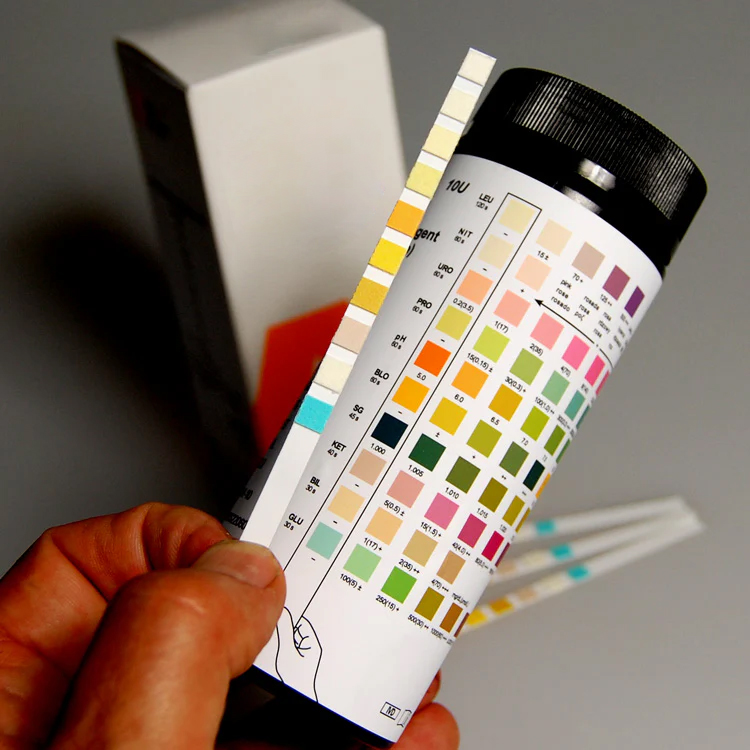
Compare the color on the reagent pads with the color chart provided on the test strip container.
Compare the color on the reagent pads with the color chart provided on the test strip container.
This allows you to interpret the urine strip test parameters and determine possible health conditions.
Common Urine Strip Test Parameters
Modern urinalysis dipstick tests can detect multiple health indicators at once.
Typical urine strip test parameters include the following:
- Leukocytes
- Nitrite
- Protein
- Glucose
- Ketones
- Blood
- pH level
- Specific gravity
- Nitrite
- Protein
- Glucose
- Ketones
- Blood
- pH level
- Specific gravity
These parameters help doctors evaluate kidney function, urinary tract infections, metabolic disorders, and other medical conditions.
Tips for Accurate Urinalysis Dipstick Results
To improve the accuracy of urine reagent strips, consider the following tips:
- Use fresh urine samples
- Follow the recommended reaction time
- Store test strips in a cool, dry place
- Avoid touching reagent pads with fingers
To improve the accuracy of urine reagent strips, consider the following tips:
- Use fresh urine samples
- Follow the recommended reaction time
- Store test strips in a cool, dry place
- Avoid touching reagent pads with fingers
Learning how to use urine test strips correctly is essential for accurate urinalysis results. With proper handling and interpretation of urine strip test parameters, urinalysis dipstick testing can provide valuable insights into a person's health.
As demand for rapid diagnostics continues to grow, high-quality urine reagent strips from a reliable urinalysis strips manufacturer will remain an important part of modern healthcare testing.
As demand for rapid diagnostics continues to grow, high-quality urine reagent strips from a reliable urinalysis strips manufacturer will remain an important part of modern healthcare testing.
What Do Urine Test Strips Detect?
How Do Urine Test Strips Work?
Related Article
Learn how urine test strips help detect urinary tract infections (UTI). Discover how urinalysis dipstick and urine reagent strips identify key urine strip test parameters such as leukocytes and nitrite.
How Urinalysis Dipstick Helps Identify Urinary Tract Infections
Compare urinalysis dipstick testing with laboratory urine tests. Learn how urine reagent strips work, what urine strip test parameters detect, and how a reliable urinalysis strips manufacturer ensures testing accuracy.
Urinalysis Dipstick vs Laboratory Urine Test: Which Is More Accurate?

