How Do Urine Test Strips Work?
- Urinary tract infection screening
- Kidney function monitoring
- Diabetes detection
- Liver health assessment
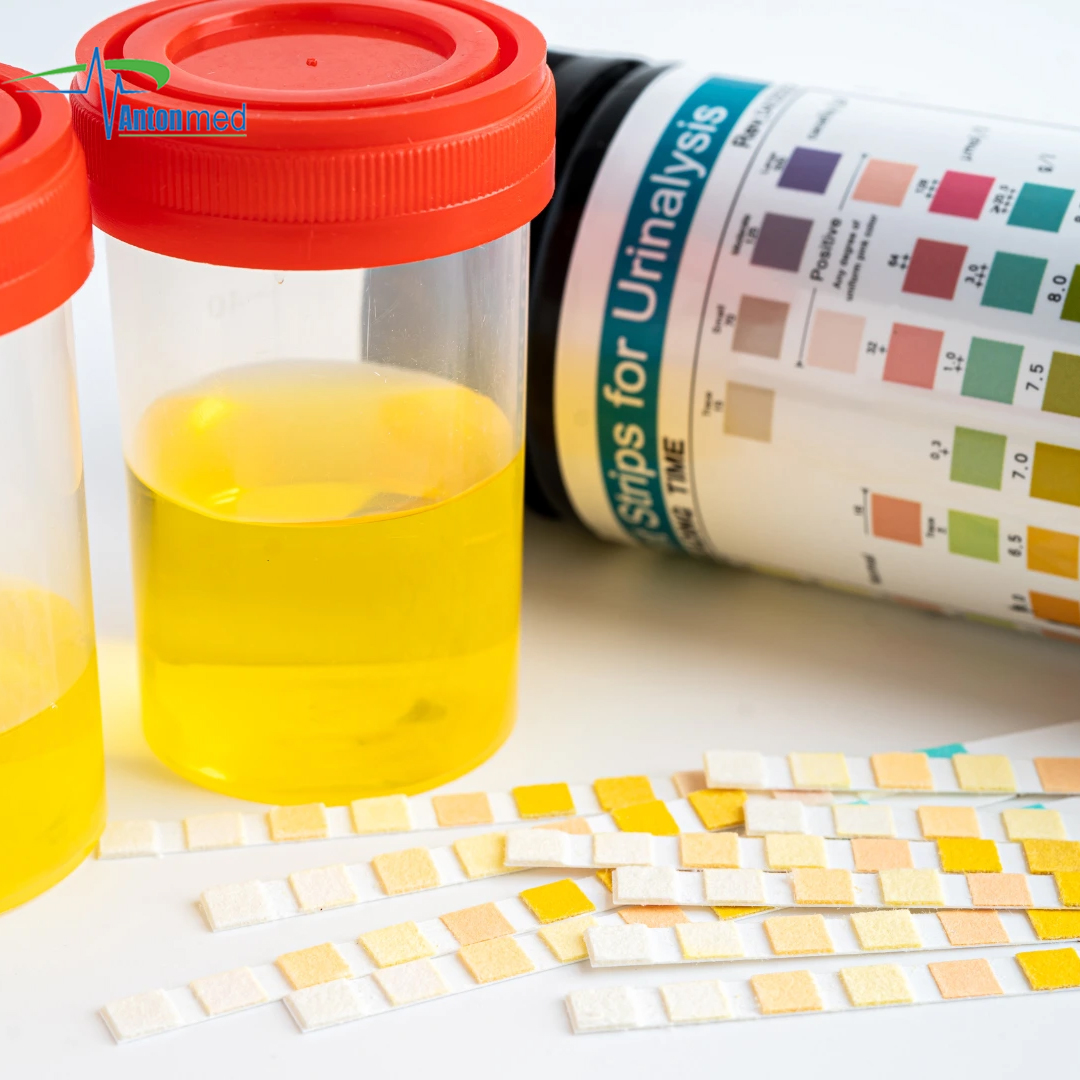
The principle behind urine reagent strips is based on biochemical reactions. Each reagent pad contains specific chemicals that react with substances found in urine.
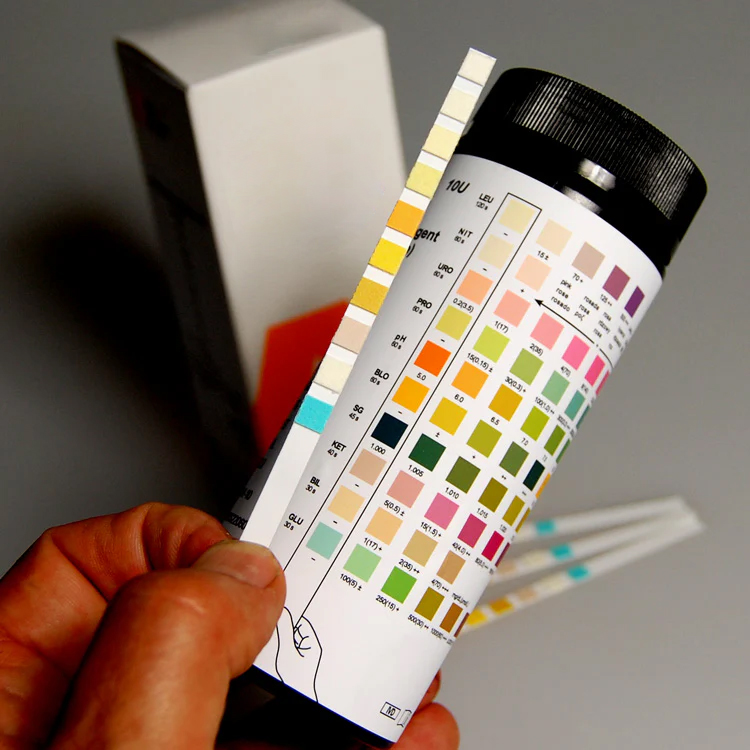
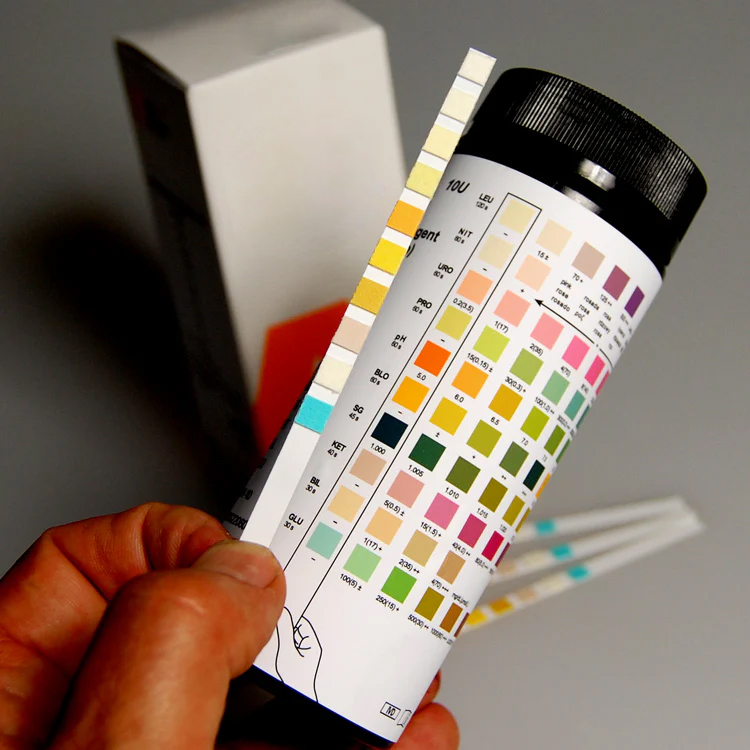
When the strip comes into contact with urine, the reaction causes a color change on the pad. The color is then compared with a standardized color chart to determine the concentration of each substance.
This simple chemical reaction system allows the test to deliver quick results without the need for complex laboratory equipment.
Because of this rapid testing capability, urinalysis dipstick testing has become one of the most widely used screening methods in clinical diagnostics.
Indicates the presence of white blood cells, often associated with urinary tract infections.
Helps detect bacteria that may cause infections in the urinary system.
Elevated protein levels may suggest kidney damage or kidney disease.
Glucose in urine can be a sign of diabetes or abnormal blood sugar levels.
Ketones may appear in urine when the body breaks down fat for energy, which can occur in diabetes or fasting.
Measures urine acidity and can indicate metabolic or kidney disorders.
The presence of blood may suggest infection, kidney stones, or other urinary tract problems.
Indicates urine concentration and hydration levels.
Most urine reagent strips provide results within 30 to 120 seconds.
The test requires only dipping the strip into urine and reading the results.
A single strip can detect multiple health indicators simultaneously.
Urine test strips are affordable compared with laboratory testing.
Urine test strips are simple but powerful diagnostic tools that enable fast and efficient health screening. Through chemical reactions on reagent pads, urinalysis dipstick tests can detect multiple biomarkers and provide valuable information about a patient’s health.
With multiple urine strip test parameters, these strips can help identify conditions such as urinary tract infections, kidney disease, diabetes, and metabolic disorders.
As global demand for rapid diagnostic solutions continues to grow, high-quality urine reagent strips from a trusted urinalysis strips manufacturer will remain essential for reliable and accessible healthcare testing.
How to Use Urine Test Strips?
When Is the Best Time to Take a Flu Rapid Test?
Related Article