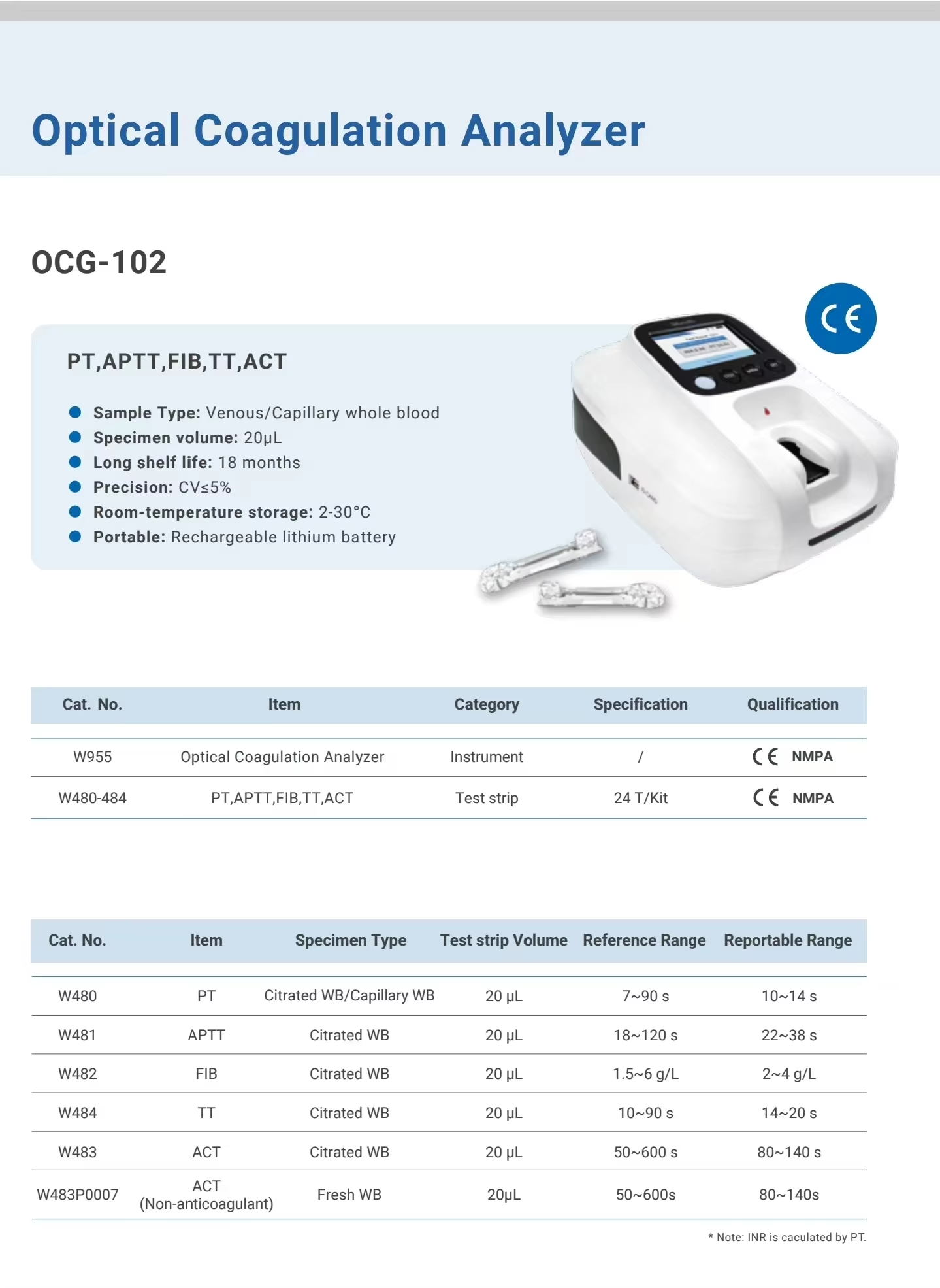


Diagnostic Reagent Analyzer Coagulation Test
HV01
A coagulation analyzer (also commonly known as a coagulometer or coagulometer) is a medical testing device used to detect and analyze blood coagulation function. It uses a series of tests to help doctors assess a patient's risk of bleeding and thrombosis.
Delivery:
EXW, FCA, FOB
minimum order:
1 piece
Supply Ability:
15piece / Day
Quantity:
What is Human Coagulation Analyzer?
A coagulation analyzer (also commonly known as a coagulometer or coagulometer) is a medical testing device used to detect and analyze blood coagulation function. It uses a series of tests to help doctors assess a patient's risk of bleeding and thrombosis.
Human coagulation analyzers are essential devices in modern medicine, particularly in blood transfusion departments, clinical laboratories, hematology departments, cardiology departments, and surgery departments. By rapidly and accurately assessing the balance between the body's coagulation and anticoagulation systems, they provide crucial laboratory evidence for disease diagnosis, treatment planning, and efficacy monitoring, directly impacting patient safety and treatment outcomes.
Main Application
Preoperative Screening: Ensures patients are free of potential bleeding risks and ensures surgical safety.
Diagnosis of Bleeding Disorders: Such as hemophilia, von Willebrand's disease, and platelet dysfunction.
Diagnosis and Monitoring of Thrombotic Disorders: Such as deep vein thrombosis, pulmonary embolism, and disseminated intravascular coagulation.
Anticoagulation Therapy Monitoring: Monitors patients taking anticoagulants such as warfarin and heparin to ensure their efficacy remains within a safe and effective range.
Liver Disease Assessment: The liver synthesizes most coagulation factors. Severe liver impairment can significantly prolong PT and APTT.
Obstetrics and Critical Care: Monitors pregnancy-related coagulation issues and the coagulation status of critically ill patients.
Preoperative Screening: Ensures patients are free of potential bleeding risks and ensures surgical safety.
Diagnosis of Bleeding Disorders: Such as hemophilia, von Willebrand's disease, and platelet dysfunction.
Diagnosis and Monitoring of Thrombotic Disorders: Such as deep vein thrombosis, pulmonary embolism, and disseminated intravascular coagulation.
Anticoagulation Therapy Monitoring: Monitors patients taking anticoagulants such as warfarin and heparin to ensure their efficacy remains within a safe and effective range.
Liver Disease Assessment: The liver synthesizes most coagulation factors. Severe liver impairment can significantly prolong PT and APTT.
Obstetrics and Critical Care: Monitors pregnancy-related coagulation issues and the coagulation status of critically ill patients.